When Forces Converge
Week ending Friday 6 March 2026
“Everything that happens is the result of many causes coming together.”— Ray Dalio
When Forces Converge
Most commentary tries to explain the property market using one variable.
Interest rates.
Immigration.
Supply.
Government incentives.
But markets rarely move because of a single factor.
They move because the buyer changes.
And right now, the buyer mix in Australia is shifting again.
Investors are back.
Geopolitics is adding inflation pressure.
And artificial intelligence is quietly redrawing parts of the property map.
None of these forces are new.
But together, they’re changing how the next phase of the market behaves.
For operators, the question isn’t whether the market rises or falls.
It’s who is setting the marginal price.
1. Investors Are Back in Control
New housing finance data shows a striking shift.
Investors accounted for 39.7% of housing finance commitments in the December quarter of 2025 — almost the highest share in nine years.
First home buyers accounted for 17.8%.
Five years ago, the picture was the opposite.
First home buyers held 26.3% of lending while investors represented 23.8%.
The balance has flipped.
When investors dominate the marginal bid, the market behaves differently.
Investors chase:
capital growth
momentum
rental yield
future optionality
First home buyers chase:
affordability
security
emotional ownership
Different motivations produce different price behaviour.
And when investors dominate auctions and open homes, pricing can move faster than policy makers expect.
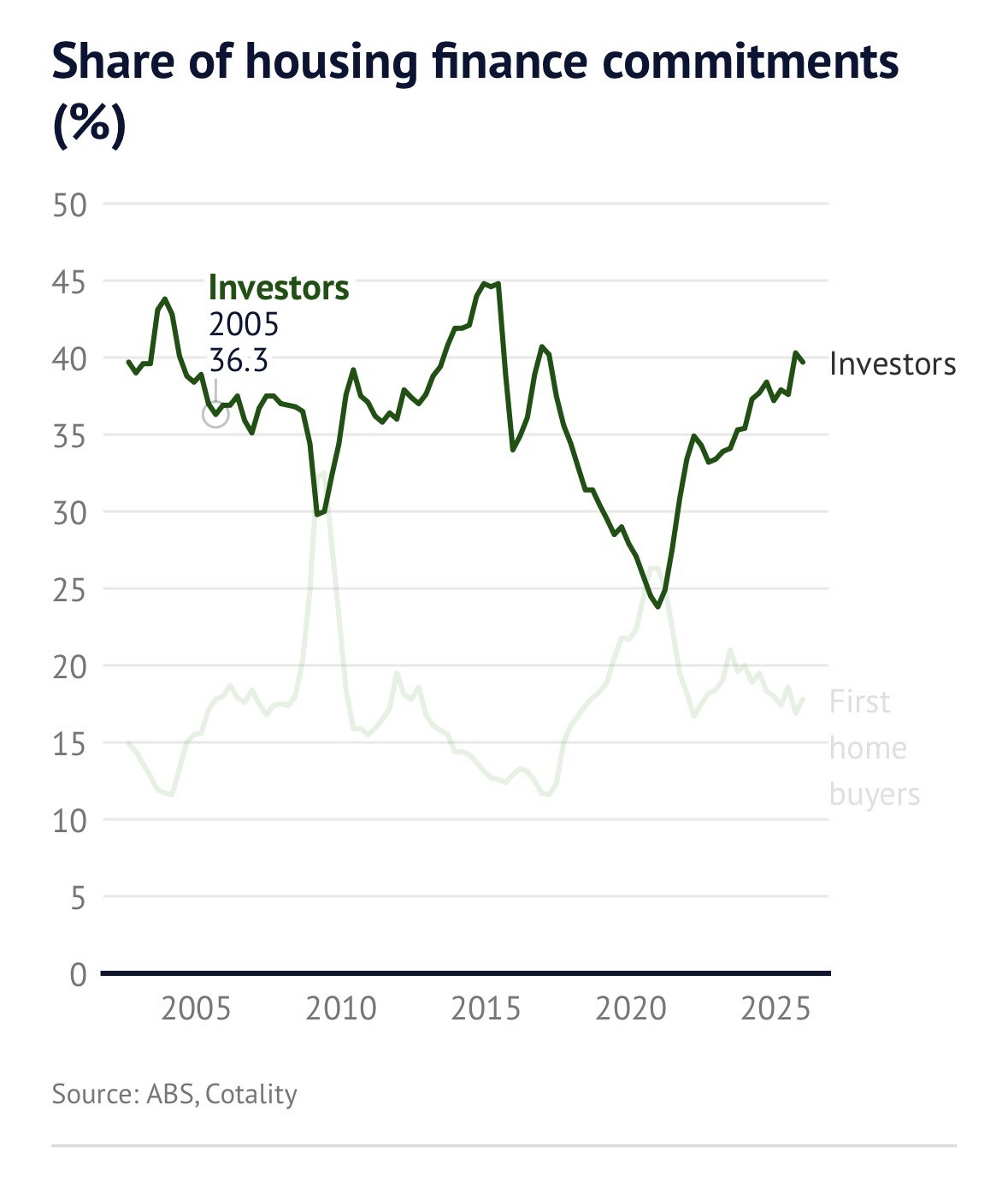
Buyer Mix Has Flipped
Housing Finance Share
2020 vs 2025
First Home Buyers
26.3% → 17.8%
Investors
23.8% → 39.7%
Operator takeaway
When investors dominate the marginal bid, competition intensifies for the same stock.
Entry-level houses.
Renovator opportunities.
Growth corridors.
These all become crowded.
Operators avoid crowded lanes.
They look for:
complexity
overlooked assets
properties that require execution
Because the easiest deals are the first ones to disappear when investor capital returns.
2. Government Incentives Don’t Remove Competition
The government’s 5% deposit scheme for first home buyers has expanded.
On paper, that sounds like relief for new buyers.
In reality, it creates concentration.
The scheme applies to properties under certain price caps.
That funnels buyers into the same segment of the market.
And unfortunately for first home buyers, that segment is exactly where investors also like to operate.
Affordable houses with strong growth potential.
The result?
Not fewer buyers.
Just more of them standing in the same place.
Government policy rarely removes competition from property markets.
It simply herds it.
Operator takeaway
Operators don’t fight for the same assets as subsidised buyers.
They move outside the crowded lanes.
Because when policy directs demand, pricing pressure follows quickly.
3. The Middle East Is
Not The Story. Inflation Is.
The headlines this week are about the Middle East.
Markets are watching a possible escalation between Iran and Israel.
But for property markets, the conflict itself is not the story.
Energy prices are.
Oil is the quiet input cost behind almost everything in the economy.
It fuels the ships bringing goods to Australia.
The trucks delivering groceries to Coles.
The excavators on construction sites.
The diesel generators powering heavy industry.
When energy costs rise, those costs ripple through the system.
Freight gets more expensive.
Building materials cost more to move.
Food prices creep higher.
And when enough everyday prices rise at once, economists give it a name.
Inflation.
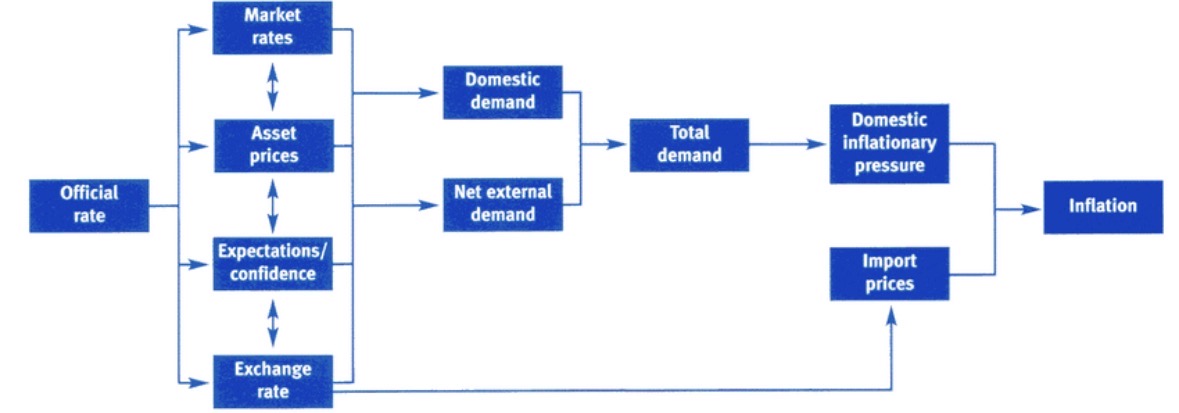
Central banks have only one blunt tool to deal with inflation.
Interest rates.
So, the transmission mechanism looks like this:
Oil → Inflation → Rates → Borrowing Power → Property Prices
The conflict is not an apocalypse.
It is an accelerant.
It pours fuel on a dynamic that already existed: inflation that refuses to behave.
Operator takeaway
Operators don’t trade geopolitical headlines.
They watch the mechanism.
If inflation stays sticky, expect:
slower rate cuts
uneven price momentum
stronger rental pressure
continued demand for well-located housing
Markets rarely move because of the headline itself.
They move because of what the headline changes downstream.
4. The Market Is Entering A “Constraint Phase”
Across Australia, the housing market is increasingly defined by constraints.
Planning constraints.
Construction costs.
Labour shortages.
Land supply limitations.
These constraints are producing clear winners.
Markets with strong population growth and limited supply continue to attract capital.
Rental markets remain tight.
Meanwhile, oversupplied segments struggle to gain traction.
The next phase of the property cycle is unlikely to be a broad boom.
It is more likely to be selective strength.
Some cities will outperform.
Some asset types will stagnate.
And execution will matter more than timing.
We’re not reading tea leaves.
The numbers are already moving.
National rental vacancy is back to 1.2% — and the “tight” cities are properly tight:
Hobart 0.4%, Perth 0.6%, Adelaide 0.8%, Darwin 0.8%, Brisbane 0.9%.
When vacancy sits under 1%, the rental market stops being a market.
It becomes a queue.
At the same time, the supply pipeline isn’t exactly roaring back to life.
January approvals fell 7.2%, and the unit/apartment side fell 24.5%.
So, you get the classic constraint cocktail:
Demand pressure + tight rentals + a sluggish pipeline.
That’s why commentary is increasingly splitting the market into “winners and losers” rather than one national story.
Operator takeaway
In constraint markets, optimism doesn’t pay.
Execution does.
The crowd waits for growth.
Operators manufacture it — renovation, subdivision, development, repositioning — because when supply is tight, value-add has a tailwind.
AI Corner
AI Is Quietly Redrawing Parts of the Property Map
Most people still think of artificial intelligence as a software story.
Chatbots.
Productivity tools.
Automation.
But AI is also becoming a real estate story.
The infrastructure behind artificial intelligence — data centres, compute clusters, energy-heavy processing — needs physical space.
Not just any space.
Facilities with massive power supply.
High-capacity fibre connections.
Cooling systems capable of handling enormous computing loads.
As a result, parts of the industrial property market are beginning to split.
On one side are AI-ready buildings — facilities close to power infrastructure and data networks.
On the other are older industrial assets designed for a different era of logistics and storage.
The difference matters.
Because when tenant demand changes, property values tend to follow.
Most commentary stops at this chart.
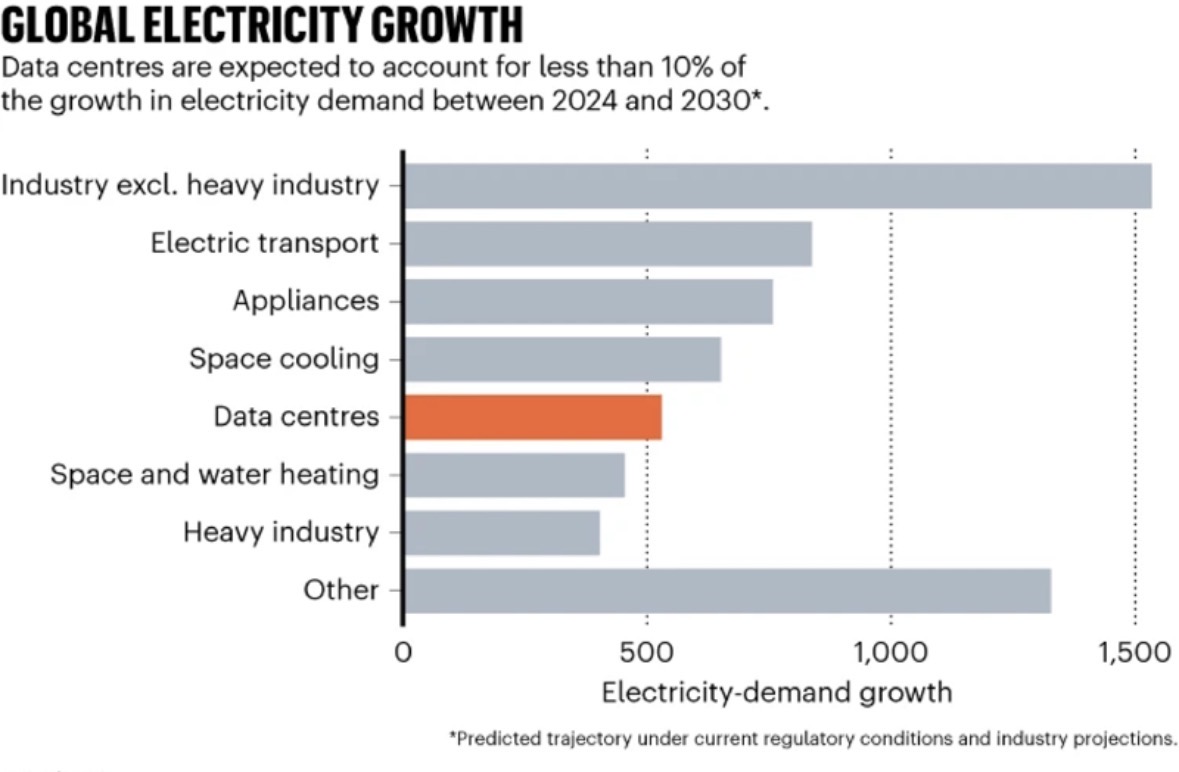
It concludes that AI isn’t as energy-hungry as people feared.
But that misses the real estate implication.
Electricity demand is a global number.
Real estate is local.
Electricity has to be delivered somewhere — through substations, fibre networks, and land capable of supporting the infrastructure.
Which means AI doesn’t just change software.
It changes where the demand for certain types of property appears.
Industrial land near power infrastructure.
Sites capable of supporting large energy loads.
Locations connected to high-capacity data networks.
Operator takeaway
Technology doesn’t just disrupt industries.
Eventually, it reprices the buildings those industries need.
And the investors who notice that shift early usually arrive long before the crowd.
The Last Word
The crowd wants a simple story.
Rates up.
Rates down.
Market boom.
Market crash.
Reality is messier.
Investor demand is rising.
Inflation risks remain.
Supply constraints are tightening.
And new technologies are quietly redrawing parts of the map.
Markets don’t move because of one variable.
They move because multiple forces align at the same time.
Operators don’t try to predict every headline.
They focus on something simpler.
Buy better.
Structure better.
Execute faster.
And when the crowd gets emotional…
trust the system.
