The Uncertainty Premium
Week ending Friday 10 July 2026
“Why certainty is usually the most expensive thing you can buy.”
There is a strange paradox in almost every area of life.
The more certain something becomes…
…the less valuable it usually is.
By the time everyone agrees a suburb is “hot”, prices have often already risen.
By the time everyone agrees interest rates are falling, banks have already priced it in.
By the time everyone is convinced the economy is recovering, the share market has usually already moved.
Certainty feels safe.
But certainty is expensive. Or as Warren Buffett said “you pay a very high price for a cheery consensus”
This week was a perfect illustration.
Auction clearance rates continued to fall.
First-home buyers were reportedly sitting on the sidelines waiting for confidence to return.
Property investors were debating whether they were buying in the wrong suburbs.
At the same time, dozens of banks cut their mortgage rates despite the Reserve Bank leaving the cash rate unchanged.
None of those stories were really about property.
They were about uncertainty.
And uncertainty is where opportunity usually lives.
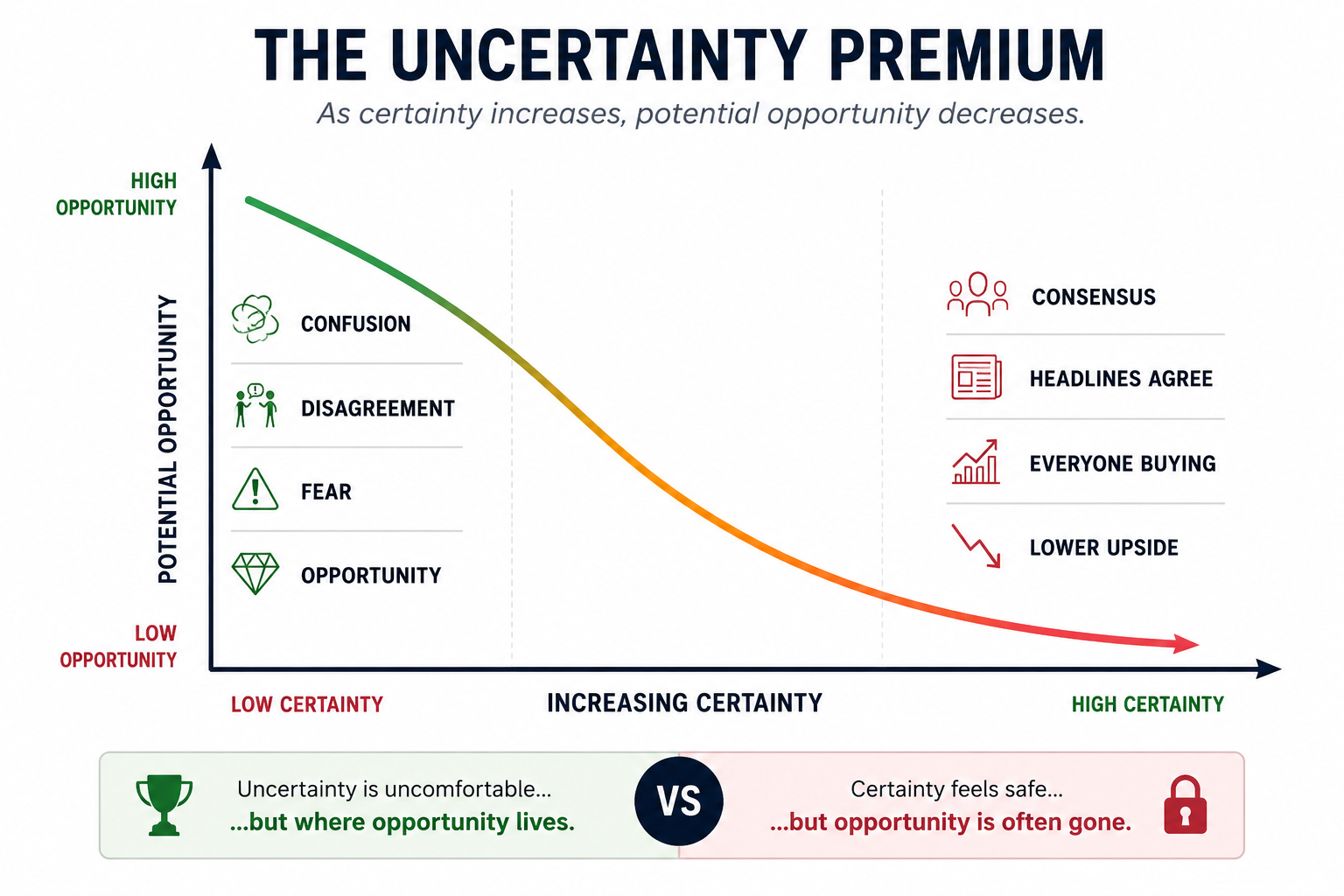
Most people spend their lives trying to eliminate uncertainty.
Successful operators learn to become comfortable inside it.
Anthony Robbins once said:
“The quality of your life is in direct proportion to the amount of uncertainty you can comfortably live with.”
Arguably the same is true of wealth.
Because every investment is really nothing more than pricing probability.
Think about horse racing.
If a horse is paying $1.05 to win, the market is almost certain of the outcome.
You might still win.
But you’ll barely be rewarded.
The big returns don’t come from certainty.
They come from recognising something the rest of the market hasn’t yet seen.
Professional operators do exactly the same thing.
They aren’t looking for guarantees.
They’re looking for situations where the odds have been misunderstood.
The same applies to property.
When Headlines Become Blindfolds
One of this week’s biggest stories focused on auction clearance rates falling dramatically.
Many commentators immediately concluded this meant the market was weakening.
Perhaps.
But perhaps not.
That conclusion assumes sellers are under pressure to sell.
What if they’re not?
Today’s market isn’t 1991.
Interest rates aren’t 17%.
Unemployment isn’t soaring.
Many owners have another option.
They simply withdraw the property.
Or rent it.
Or wait.
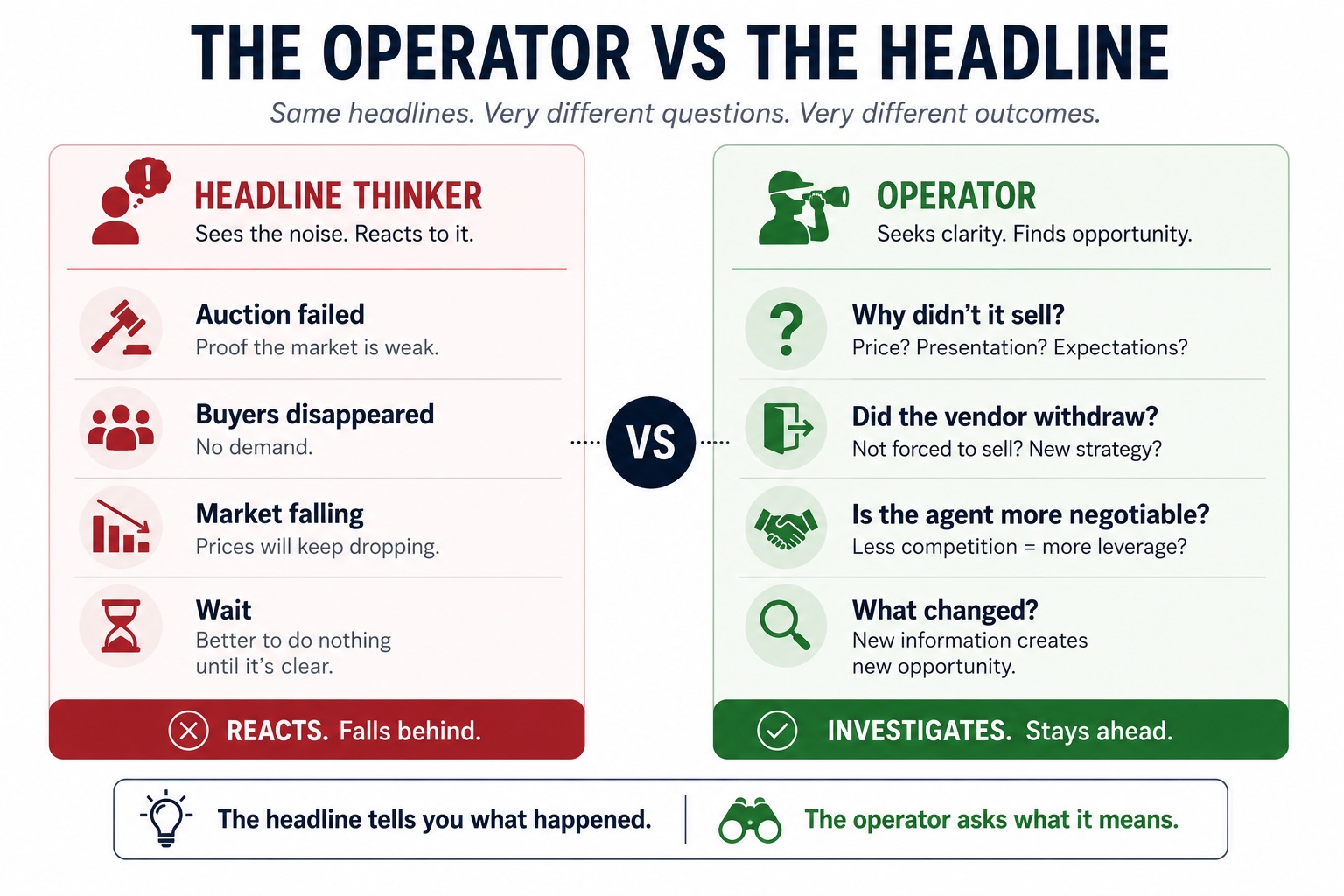
The headline reports a failed auction.
An operator asks a different question.
“Where did that property go?”
Because a withdrawn listing may become tomorrow’s negotiated deal.
Maybe the opportunity is no longer standing in the crowd on auction day.
Maybe it’s calling the agent two weeks later.
The market hasn’t necessarily become weaker.
The seller is still there, albeit more motivated at the negotiation table - the game may simply have changed.
The same pattern appeared elsewhere this week.
Several lenders reduced mortgage rates despite the Reserve Bank leaving official interest rates unchanged.
If you’re waiting for one single signal telling you what happens next, you’ll always be frustrated.
Markets don’t move as one.
They’re millions of individual decisions happening simultaneously.
Banks compete.
Borrowers adapt.
Agents change strategy.
Developers negotiate.
Vendors change their minds.
Every participant is responding to different incentives.
That’s why certainty rarely arrives all at once.
Another article questioned whether investors were buying in the wrong suburbs.
It’s an understandable question.
But perhaps it’s the wrong question altogether.
Operators don’t really buy suburbs.
They buy opportunities.
Within every suburb you’ll find:
Motivated sellers.
Divorce settlements.
Deceased estates.
Poor renovations.
Development sites.
Exceptional negotiators.
Unrealistic vendors.
The suburb matters.
But the property matters more.
And the seller circumstances will be the biggest driver of outcomes.
Opportunity isn’t evenly distributed across a postcode.
It’s hidden inside individual situations.
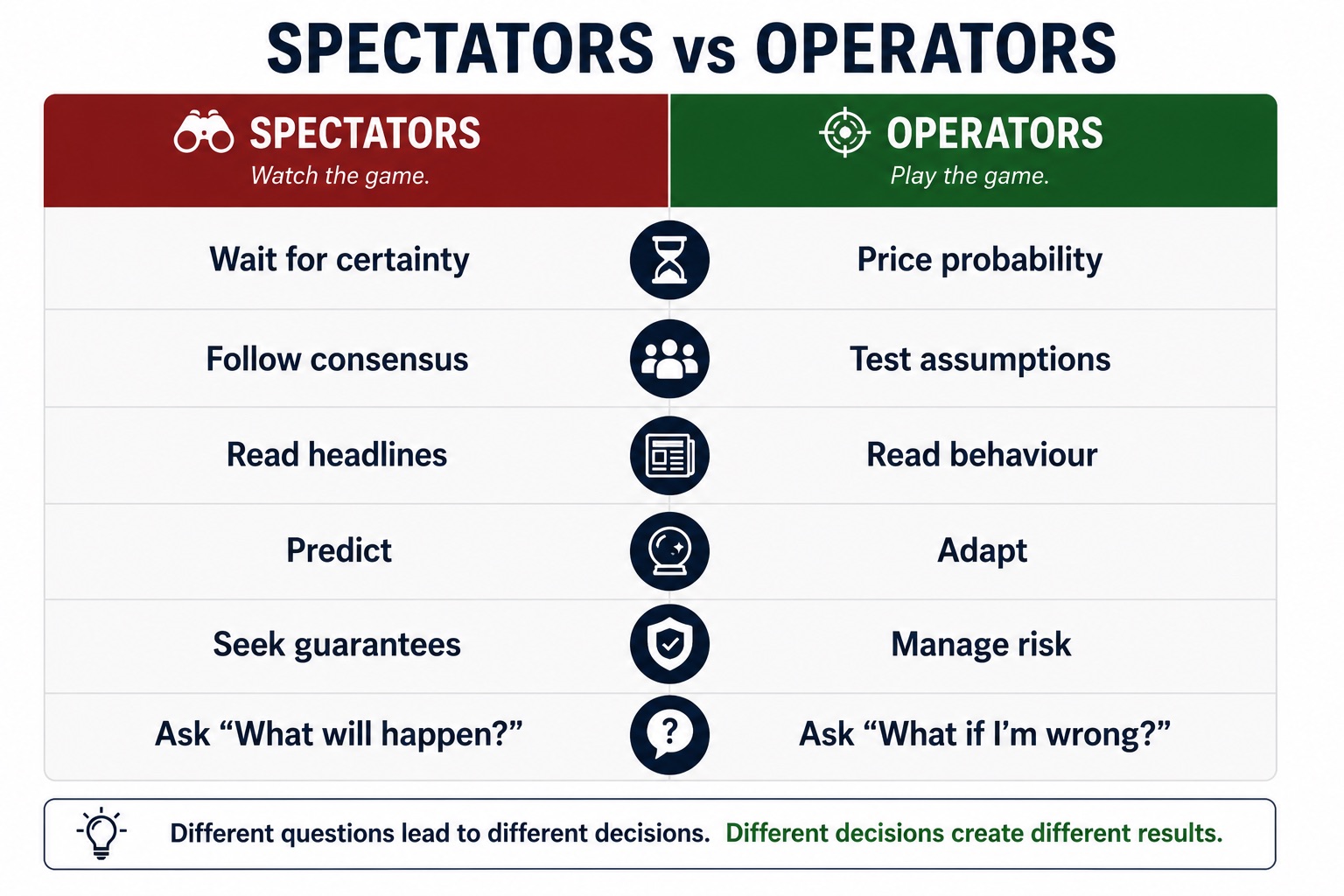
Perhaps that’s the real lesson from this week’s news.
Most people were trying to predict what happens next.
Operators play a different game.
They ask:
“Given what we know today… how can I reduce uncertainty before I make a decision?”
It’s a subtle distinction, but it changes everything.
One person waits for certainty to arrive.
The other creates it.
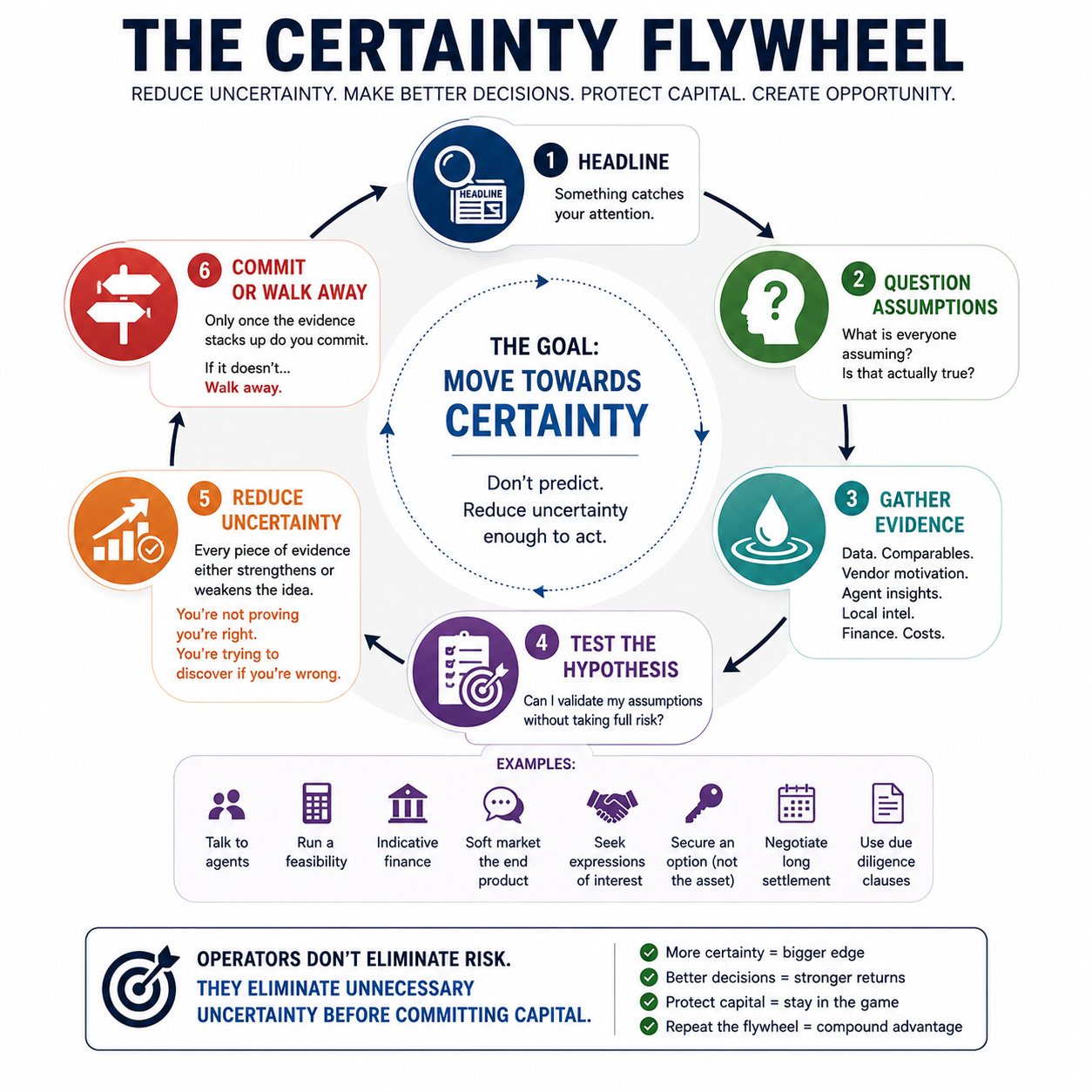
They:
* question assumptions,
* gather evidence,
* test ideas before committing capital,
* speak to agents,
* run feasibility studies
* obtain builder quotes
* negotiate longer settlements.
* indicative finance.
Every conversation, data point and test removes a little more uncertainty.
Not until there’s none. Just enough to make an informed decision.
Because operators understand something spectators often miss.
The goal isn’t to predict the future. lt is to reduce uncertainty enough to act with confidence.
That’s where the edge lies.
The Operator’s Edge
The greatest opportunities rarely arrive wearing a name tag.
They arrive disguised as uncertainty, conflicting headlines, changing markets and situations where nobody seems entirely sure what comes next.
Most people interpret uncertainty as a reason to stop.
Operators interpret it as a signal to start paying closer attention.
Because they understand that the future never arrives fully explained.
It rewards those who can make thoughtful decisions before everyone else feels comfortable.
Or, to borrow Anthony Robbins’ insight, perhaps success is simply learning to become comfortable being uncomfortable.
Because the uncertainty everyone else is avoiding…
…may be exactly where the premium is waiting for you.
