The Joker
Week ending Friday 13 March 2026
The Joker
Every serious card player knows the same truth.
The cards matter.
But the player matters more.
Two people can sit at the same table, receive the same hand, and walk away with completely different outcomes.
One folds too early.
One chases losses.
One panics when the game shifts.
The other waits.
Reads the table.
And plays the cards that are actually in front of them.
Markets work the same way.
The Table Is Shifting
A few small things happened in Australia’s property market this week.
Clearance rates softened.
Listings ticked higher.
A few more homeowners quietly decided to sell.
Nothing dramatic.
Just a wobble.
But good players know the early signals and can read the tells.
The mood around the table matters as much as the cards.
The Biggest Pot On The Table
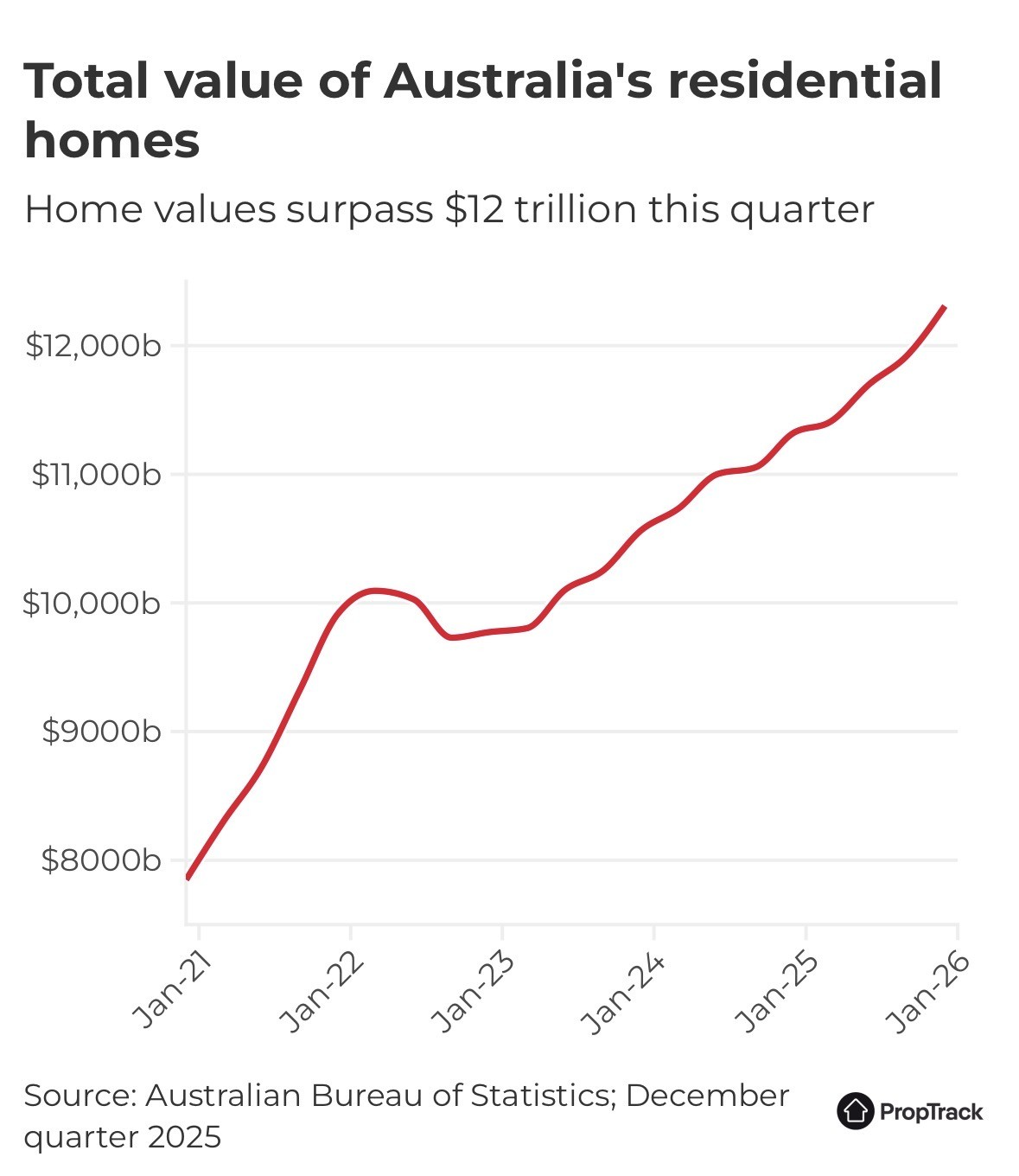
Meanwhile another number surfaced this week.
The combined value of Australian housing has now reached $12.3 trillion.
That’s larger than the GDP of most countries.
Australia hasn’t just built houses.
It has built an entire economic system around property.
When the pot gets that large, something changes.
The game stops being about property.
It becomes about politics, credit, and survival.
Because when a nation ties its balance sheet to one asset class, nobody wants to be the player who knocks over the table.
Ricardo’s Old Lesson
Two centuries ago, the economist David Ricardo observed something simple about markets.
Land is scarce.
And when land becomes the preferred store of wealth, capital flows into it relentlessly.
Not because it is always the most productive investment.
But because people believe it is the safest one.
Sound familiar?
Australia has spent the past two decades turning housing into the country’s favourite asset class.
Tax settings encourage it.
Credit systems support it.
Policy protects it.
It’s not an accident.
It’s the structure of the game.
The Politicians’ Favourite Game
Politicians say they want cheaper housing.
But their actions tell a different story.
Because falling house prices create problems governments cannot easily solve.
Bank balance sheets weaken.
Household wealth evaporates.
Consumer confidence collapses.
So the system quietly protects the pot.
Interest rates shift.
Migration changes.
Credit rules move.
All nudging the same asset.
Housing.
The Joker Appears
While everyone argues about rates and listings, another card has appeared on the table.
Artificial intelligence.
This week Atlassian announced significant job cuts as AI replaces parts of the white-collar workforce.
Law.
Finance.
Tech.
Marketing.
These are not random sectors.
They are the sectors that traditionally buy the most property.
This doesn’t crash housing tomorrow.
But it introduces a new card into the game.
The joker.
Nobody quite knows how it will be played yet.
The Crowd’s Mistake
Most people sit at the table trying to predict the next card.
Will rates fall?
Will prices rise?
Will the market crash?
But markets rarely reward prediction.
They reward positioning.
The Operator’s Game
Professional players understand something amateurs forget.
You don’t control the cards.
You control how you play them.
The table shifts.
Rules change.
New players arrive.
Good operators adapt.
Bad players complain about the game.
The Operator Takeaway
Australia’s property market may wobble.
Politicians may fumble the rules.
Technology may reshuffle the workforce.
None of that changes the fundamental truth of markets.
The cards will keep changing.
The game will keep evolving.
And the players who win won’t be the ones complaining about the hand they were dealt.
They’ll be the ones who know how to play it.
Until next week -
Play the hand you’re dealt.
