The Risk No One Is Pricing
Week ending Friday 17 April 2026
Property flippers are all adjusting their feasibility models right now. Higher construction costs. Higher materials. Higher inputs. But the real risk is time. And most people aren't pricing it at all.
The Invisible Risk
Yes — costs are moving. Materials are rising. Fuel is volatile. Freight is unpredictable. Those are all known knowns. Easy to plug into a spreadsheet. But that's not the fix. Deals rarely fail halfway through. They were already wrong going in. Because the underlying assumptions were wrong.
What People Forget About Supply Chains
We've seen this before. During Covid, the assumption was simple: When lockdowns end… everything restarts. But it didn't. Containers piled up in ports. Pallets languished on docks. Labour didn't return where it was needed. Because supply chains don't restart like a machine, with the flick of a switch. They unwind. Slowly. Unevenly. With friction. And by the time it shows up in pricing… the disruption has already moved through the system.
What's Happening Now
The Rawlinsons April update didn't come with headlines. No "shock surge" or dramatic doomsday warnings. Just a system running hot… and starting to strain. Australia's construction industry has entered 2026 at record levels of activity, with quarterly output reaching ~$80 billion — one of the highest levels on record. Annual output is up ~3% year on year, a new high-water mark. At the same time, labour shortages, geopolitical pressure, and low productivity are pushing costs higher across the system.
High activity. Rising pressure. And underneath it… an erratic, more volatile supply chain. Shipping routes are longer. Fuel exposure is higher. Freight is less predictable. Lead times are stretching. Contracts are shifting risk upstream. Deals still go ahead. They just don't play out the way they were priced.
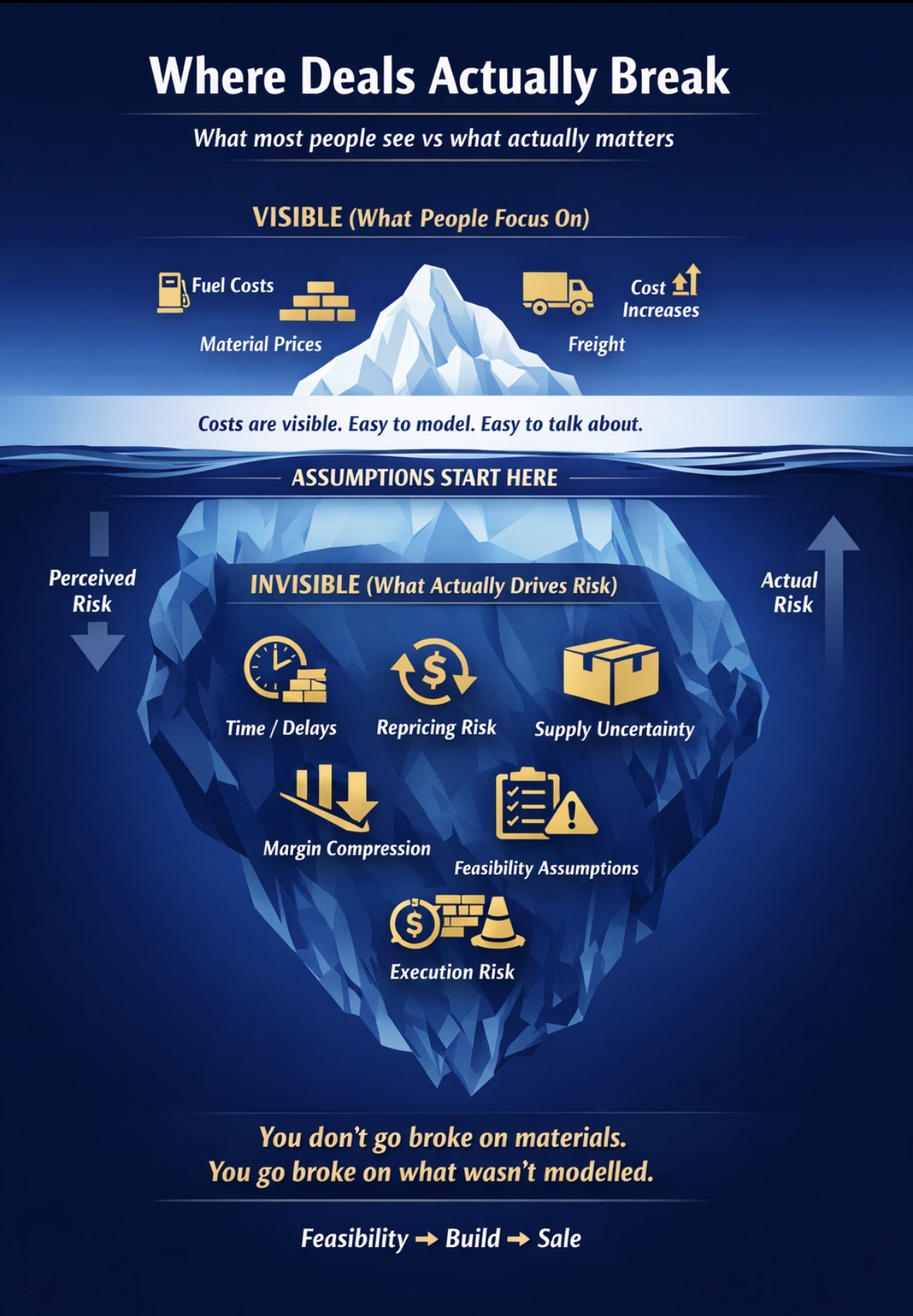
What people see: Higher Costs. What actually matters: Faulty Assumptions.
How a Deal Will Start to Drift
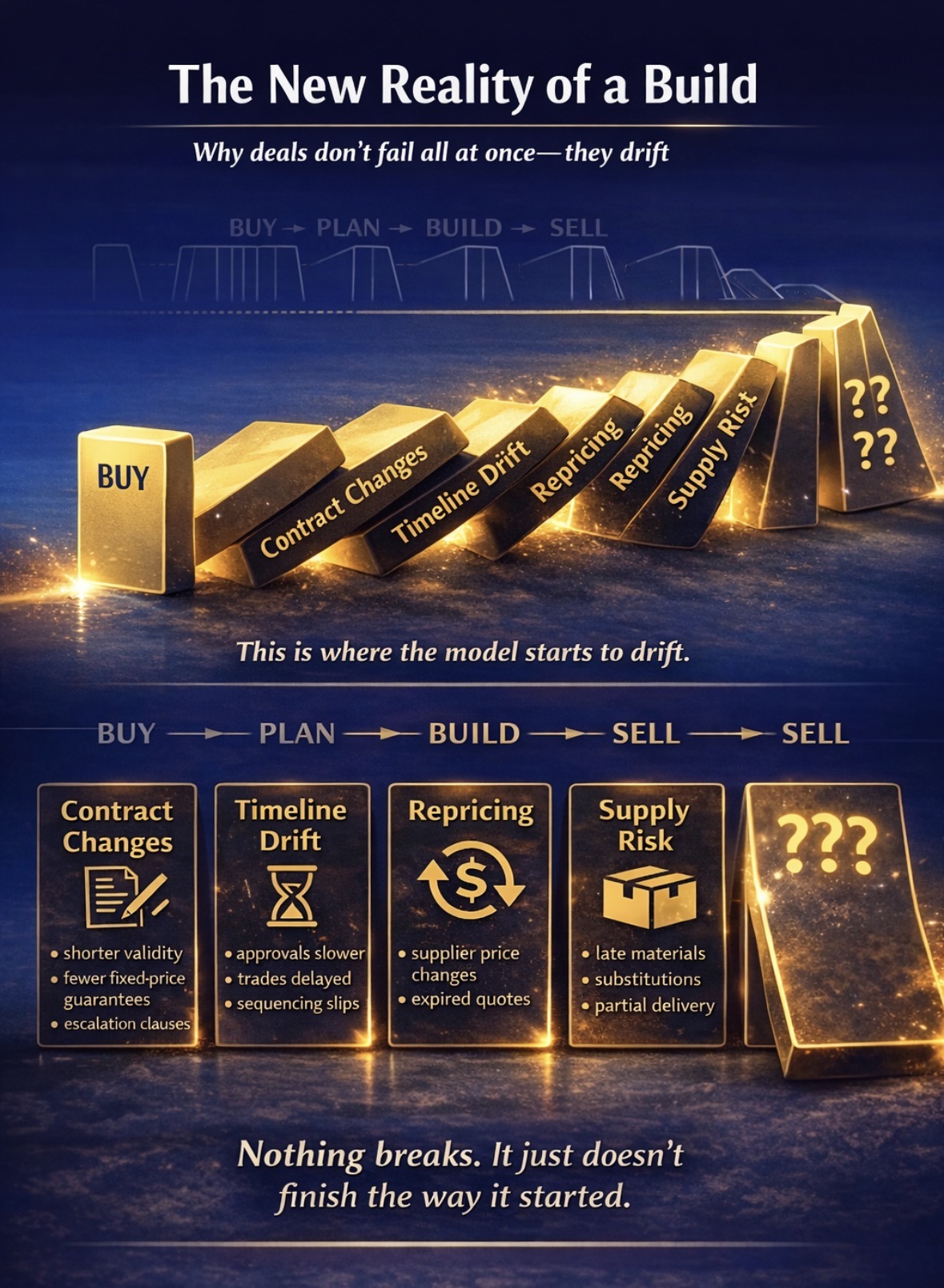
Nothing will break all at once. Like a frog in boiling water, small variables will start to stack up until the deal doesn't play out the way it was modelled and by then it will be too late…
Why Time Matters More Than Cost
Costs can move. That's manageable. Time is different. Time creates unknown exposure. Every delay introduces new pricing, new conditions, new decisions. And each one takes a little bit of margin with it. Until the deal drifts into territory you didn't model… and starts charging you for the uncertainty.
How Margin Actually Disappears
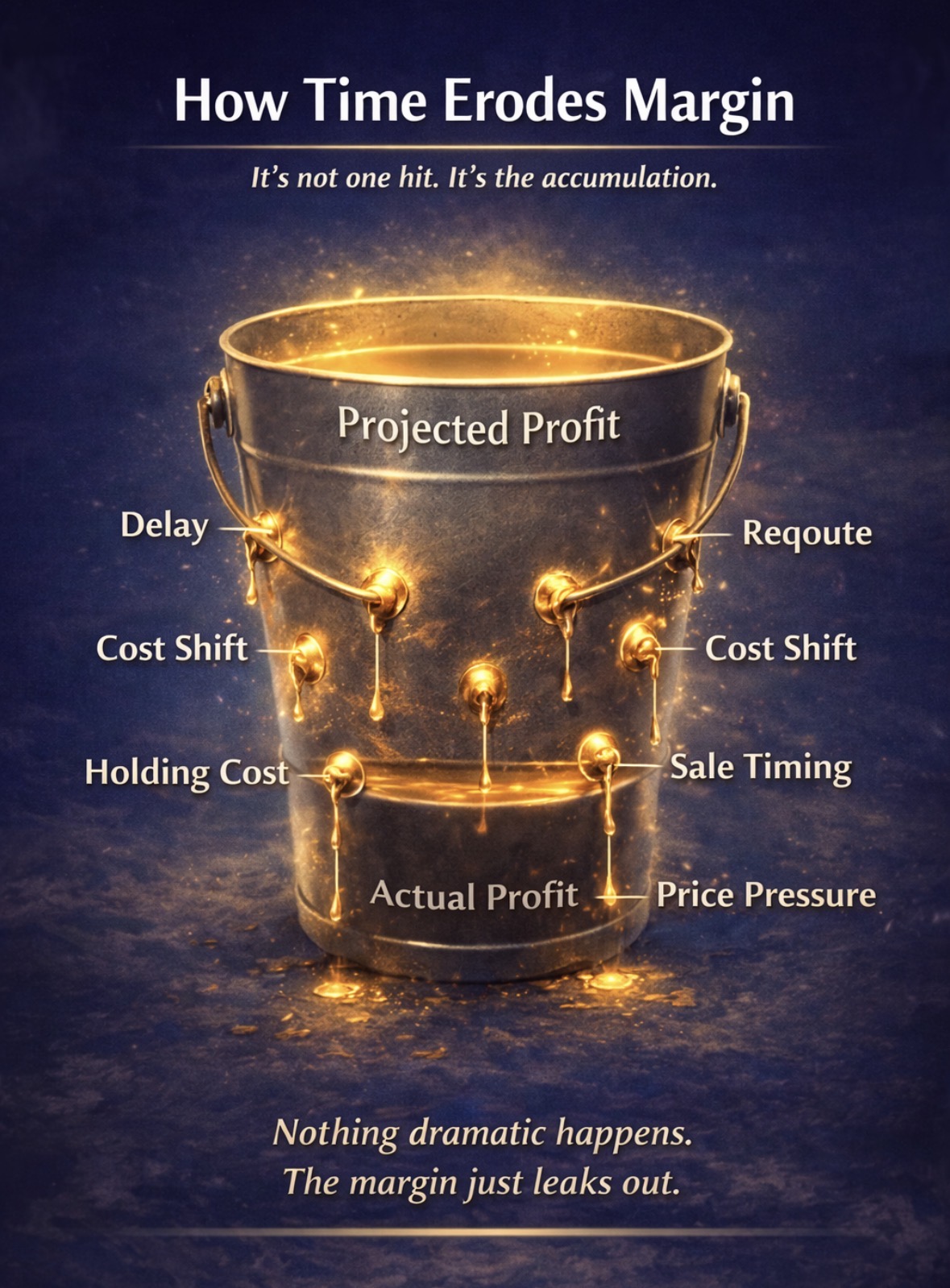
The margin springs multiple unmanageable leaks which then compound.
This Is Where Feasibilities Fall Apart
Most feasibility models assume stable inputs, predictable timelines, and fixed outcomes. They're built in a static world. This isn't one. In 2020, the signal was obvious. You didn't need to interpret it. Now? The system keeps functioning. Deals transact. People participate. Nothing forces a reaction. Which makes it easy to miss what's changing. The pressure isn't obvious. It shows up in the result. By the time it's visible it has already been absorbed.
Operator Takeaway
This is no longer a market that rewards loose assumptions. The opportunity is still there. It just sits behind better questions. What happens if this takes longer? What moves if costs shift? Where is the exposure in this deal? You don't go broke on materials. You go broke on time.
Deal Risk Pack
Inside:
Construction Risk Cheat Sheet 2026 (PDF) ↗
Where delays happen
Where costs move
What actually matters before you commit
Feasibility Stress Tester (Excel)↗
Model:
🟣 time blowouts
🟣 cost escalation
🟣 margin compression
Sage Prompts for Construction Risk (PDF)↗
Ask better questions
Stress test properly
Apply real-world risk instantly
Bottom Line
The numbers make sense at the start. It's what happens to them over time… that decides the outcome. This time… time itself has become part of the risk. And the operators who account for that early… are the ones who come out ahead.
