The Game Has Shifted. Most People Are Still Playing the Old One.
Week ending Friday 20 Feb 2026
Everyone’s arguing about prices again.
But price is the surface.
The real story is how the game is being played.
When pricing tactics distort guides…
When capital quietly rotates interstate…
When investors switch lanes without announcing it…
When AI starts reshaping how buyers search and decide…
The edge isn’t predicting the next suburb.
It’s understanding how the system is shifting and positioning inside it before the crowd realises the rules changed.
This week: guides you can’t trust, prestige money heading north, investors repositioning, and a platform-level AI move that should make every intermediary uncomfortable.
1) Underquoting crackdown: “price guide” becomes marketing copy
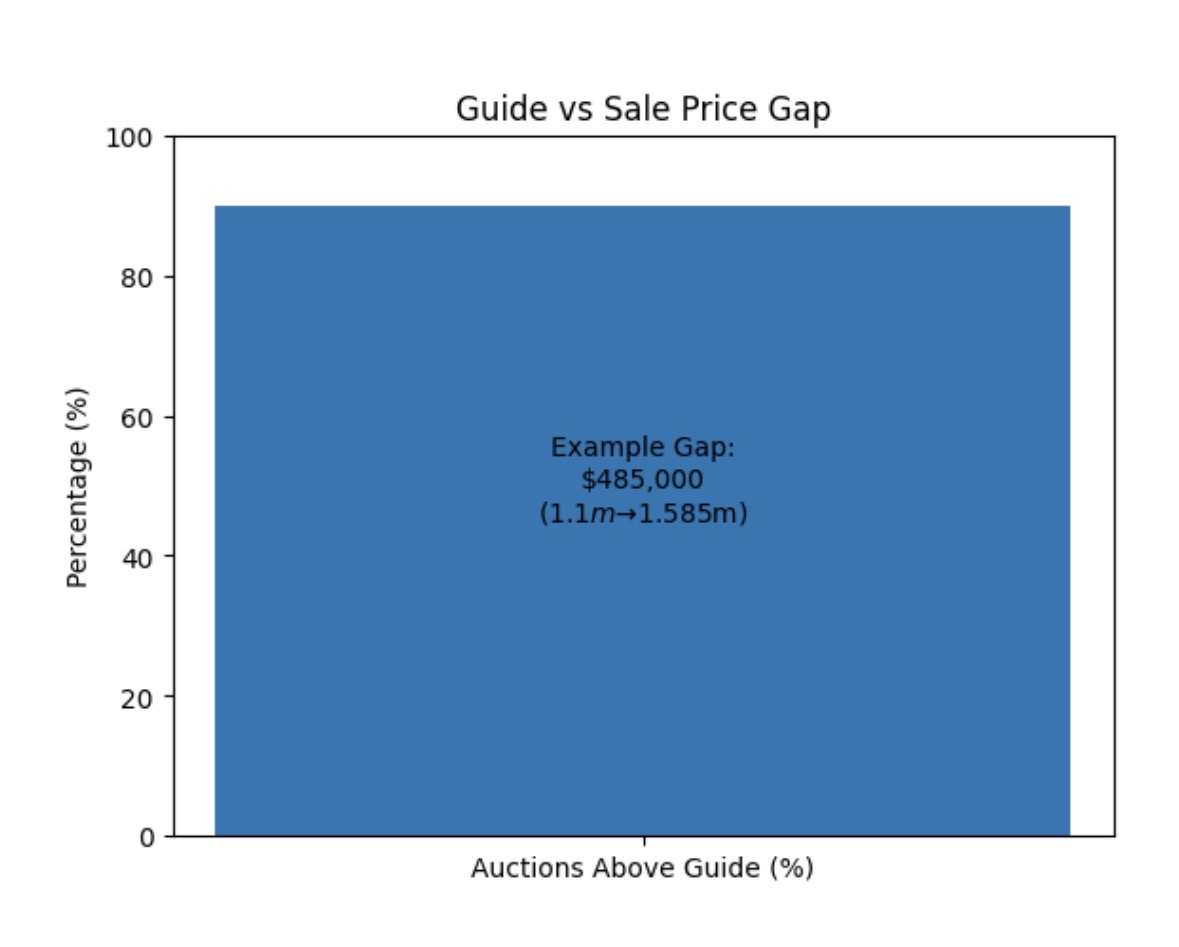
Underquoting/“price baiting” is a common, well-known entrenched market failure: buyers waste time, emotion, and money chasing homes that were never realistically in range—and the numbers suggest it’s widespread (approximately 90% of properties selling above guide prices).
Apparently the powers that be are “cracking down” on it but we’ve all heard the at before and the marketers find ways around it. Currently most agents won’t give sellers a price expectation and will put on the agency agreement “market price” - they then throw their hands in the air and say “well who would have thought - but the market has spoken”!
Operator angle
Assume the guide is a funnel headline, not a number.
Your edge is sold evidence + solid timeframes - usually not more than 6 months old (fast comps, fast ceiling, fast walk-away).
If regulators tighten rules (reserve disclosure, bigger penalties), expect the industry to “adapt” rather than reform: the tactics move upstream (campaigns, quote-ranges, “interest above”, off-market chatter).
The Guide Is a Headline. The Sale Is the Truth.
Subtitle: Pricing theatre vs market reality

90% Selling Above Guide
2) “Dirty tactics” are now mainstream—and buyers are waking up
Multiple mainstream media articles this week point to the same pattern: a meaningful chunk of buyers say they’ve seen phantom bids / fake competition / underquoting / photo manipulation. Finder survey coverage reports 27% of Australians encountered dodgy tactics, with inflated expectations (10%) and significant underquoting (9%) among the top complaints.
Operator angle
* Agents sell urgency. Operators buy margin.
* Treat “competition talk” as a pricing tactic, not market data — and anchor every move to your feasibility, your ceiling price, and your walk-away rule, not the room’s emotion.
* Your job is to convert theatre into facts: sold evidence, days on market, vendor motivation, terms, and the real cost to execute. If it can’t be validated, it doesn’t change your number.
* Build a repeatable edge with an Offer Pack you can deploy fast:
verified comps (tight range)
worst-case reno / contingency
finance/terms position
max offer + expiry (“valid until X”)
Because when agents lean harder on theatre, operators lean harder on process. And if the deal only works when you “win” emotionally, you’re being played!
3) Prestige rotation: Sydney/Melbourne “breather”, Brisbane/Adelaide “hot”
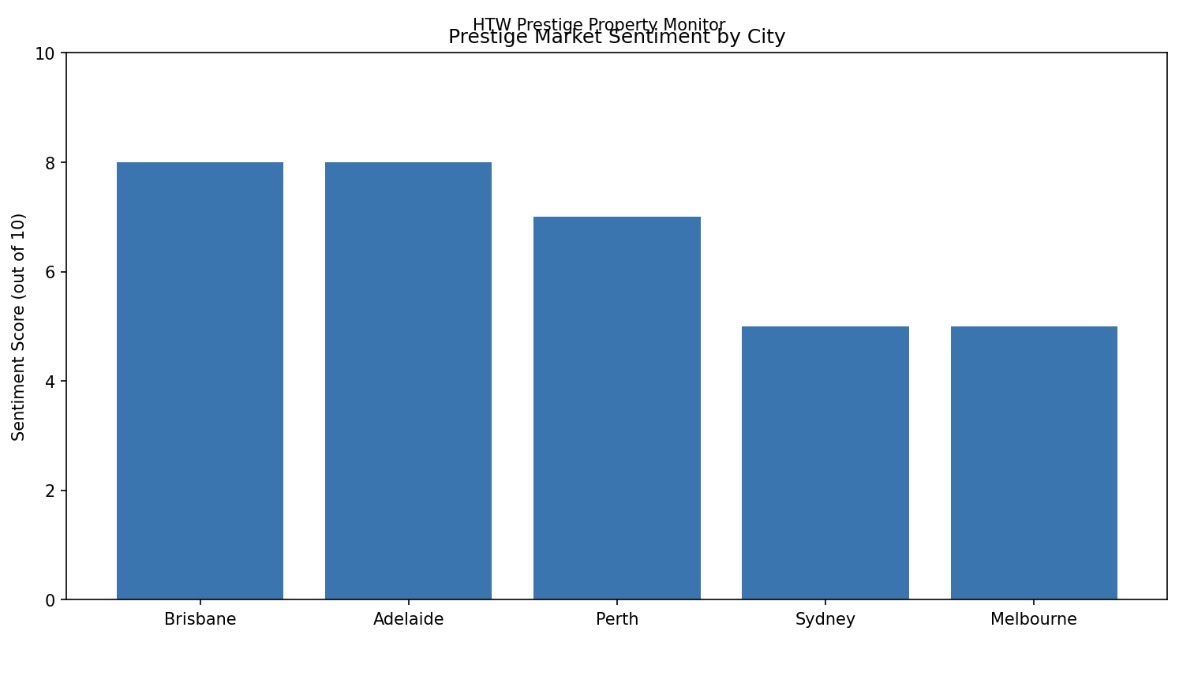
Big Australian Valuer firm HTW Prestige Property Monitor has been released and it has Brisbane + Adelaide at “hot” (score 8), while Sydney + Melbourne are “balanced” (score 5); Perth sits “warm” (7). Sydney’s top-end is flagged as subdued (notably fewer $15m+ deals), with affordability + macro pressure cited.
Operator angle
Prestige isn’t one market; it’s multiple micro-markets with different funding sensitivity.
When confidence shifts, it often shows up first in:
days on market at the top end,
depth of bidders,
discounting/offers-before-auction,
and where the next marginal buyer is coming from (interstate/international).
4) Investors are switching lanes (and it’s not subtle)
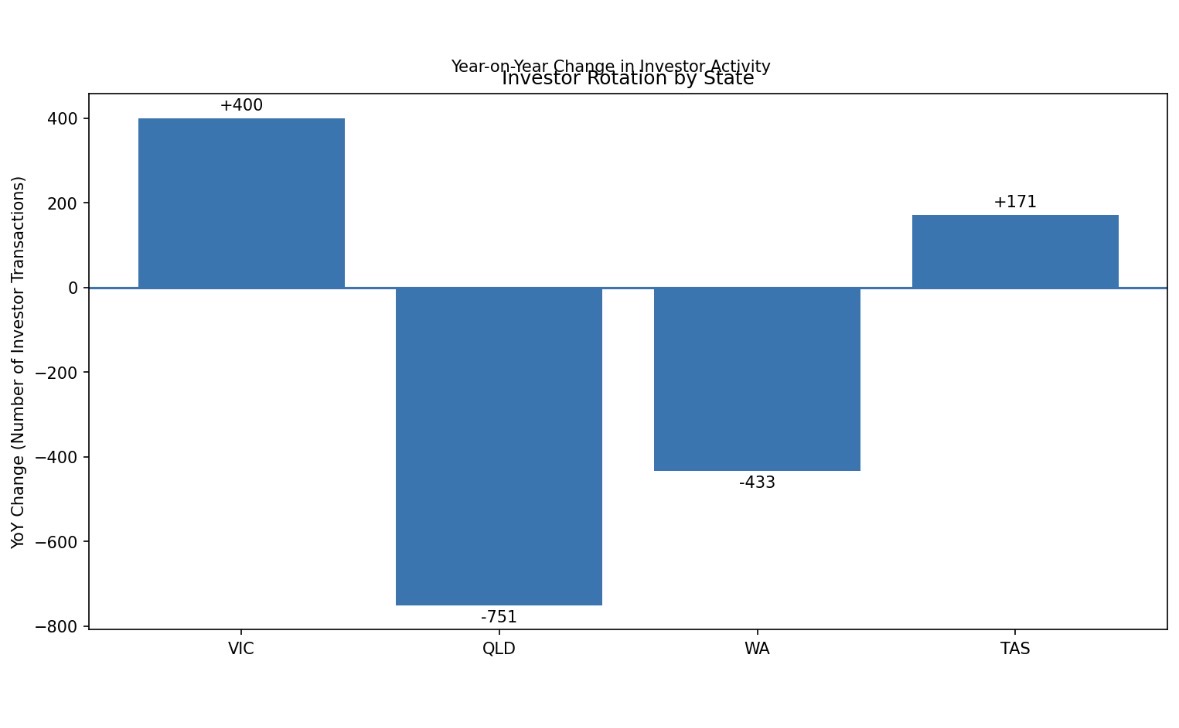
FoundIt’s Investor Index (properties sold then re-listed for rent within 180 days) suggests capital is rotating out of QLD/WA (fear of peaking + weaker yields) and into VIC/TAS where prices have reset and yields look better. Victoria recorded a lift of 400+ investor transactions YoY (Dec qtr 2025), while Queensland fell 751 and WA 433.
The specific “cooling” examples called out include Townsville (-65%), Mackay (-46.3%), Port Hedland (-55%).
Operator angle
This is what “late cycle” looks like: yield compression + risk-return re-pricing.
The opportunity isn’t “follow the herd back into VIC”—it’s to understand the mechanic:
when growth outruns fundamentals, investors don’t argue… they quietly redeploy.
5) Real wages: the silent handbrake (and why “demand” gets weird)
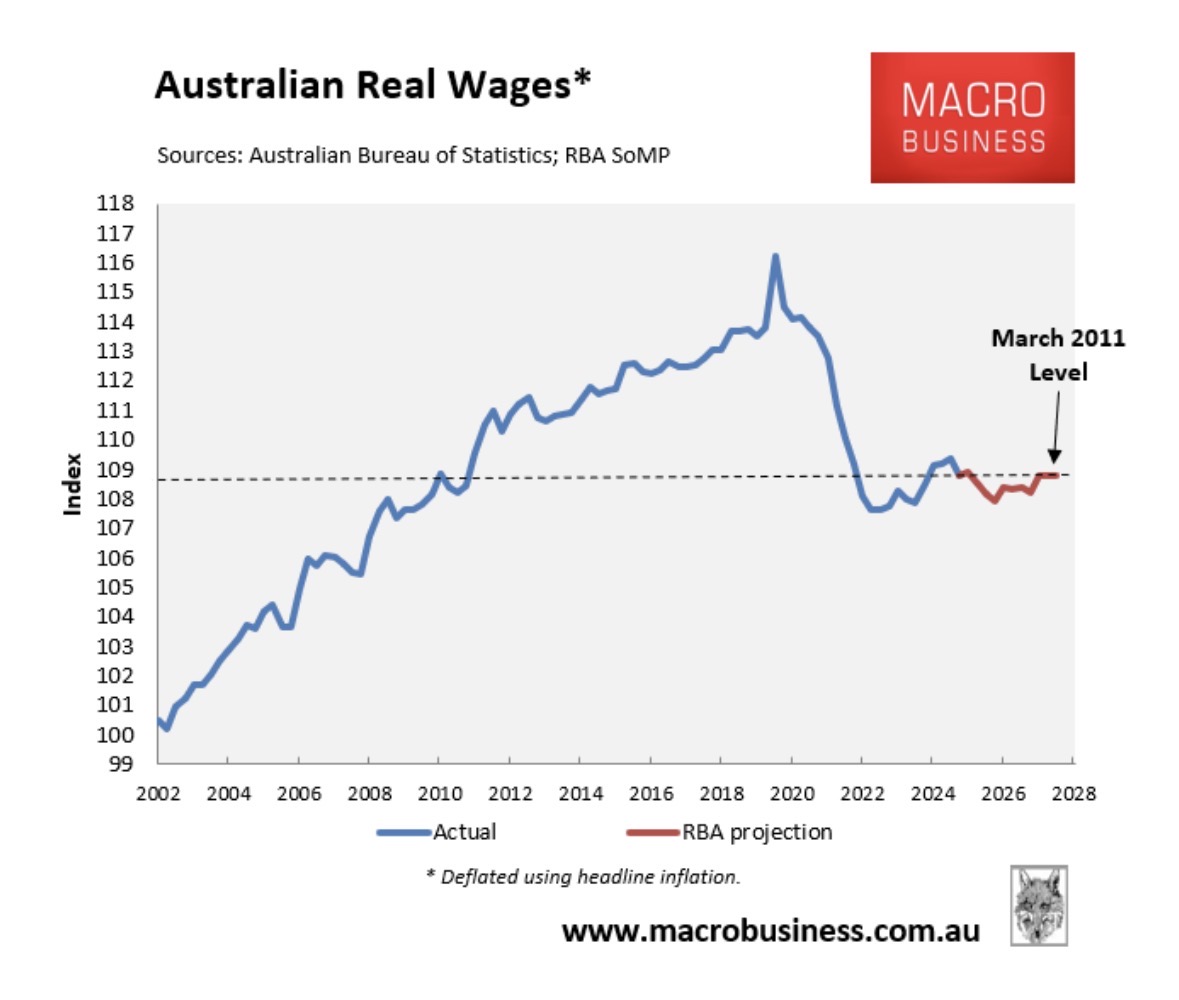
MacroBusiness highlights the RBA’s real-wage outlook: by June 2028 real wages forecast to still be ~6.4% below the mid-2020 peak (around 2011 levels), with nominal wages 3.4% YoY (Dec 2025) and real wages falling.
Operator angle
When real wages flatline, markets split:
“asset holders” behave differently to “income buyers”.
Expect more psychological extremes:
FOMO pockets where supply is tight,
and sudden buyer drop-offs where affordability hits a wall.
REA’s AI move: “own the search, own the buyer”
What are they doing?
REA is pushing property search into AI-native entry points—not just on their site, but where attention is moving.
As we discussed in last week’s newsletter, realestatecomau has a ChatGPT app that lets users search listings conversationally (budget, beds, features), refine in dialogue, and view listing previews with photos and agent info.
They’ve also been expanding AI features on-platform (e.g., conversational search and other AI tools surfaced in trade/tech coverage).
Does it Work?
It is only as strong as the weakest link and Chat GPT can still hallucinate and over-reach. REA have brought their data to the table and plugged it in to Chat GPT via a “connector”. So Chat GPT is legally accessing REAs listing without having to scrape and crawl the net.
Our users have reported unreliable results and hallucinations- even claiming it has no access to REA data when working inside the app (which is just plain wrong).
One important limitation is that it will only review current listings, not sold properties and it is lazy with keyword searches - in some instances actively referring users to the REA site and telling them to search there:

Why are they doing it?
The polite story is “better outcomes for buyers.”
The real story is platform defence + moat building:
If search moves to AI, REA wants to be the default data layer
If consumers start asking an AI, “find me…” REA doesn’t want Google/ChatGPT/anyone else to own that moment. So they’re embedding themselves into the conversation.
They’re collapsing the funnel
The faster a buyer can shortlist and engage, the more valuable the audience becomes to monetise—because REA ultimately makes money from agents, listings, and related products, not from “helping you dream.” (Consumer delight is the means, not the business model.)
They’re training the next generation’s behaviour
If younger buyers start their property journey inside AI, REA wants:
the query,
the shortlist,
the saved search,
and the next click
to route back through REA.
And Chat GPT facilitates this for them. Whilst you don’t need to be logged in to search REA listings online, accessing the app in Chat GPT required you to be logged in to Chat GPT so they are able to track you, your searches and questions to target you in marketing efforts.
Will it all be free?
Mostly, yes—at the consumer layer.
That’s the play: make the experience frictionless and “free,” because the monetisation is downstream (agents/vendors pay; the platform harvests engagement, intent signals, and lead flow). They sell your eyeballs on their data.
Even the support doc frames it as a straightforward capability: search, filter, sort, preview, refine. That’s classic “free utility” designed to increase usage and lock-in.
What’s in it for them?
More time-on-platform + better intent signals (what buyers want, when they’re hot, what they click).
More leverage over agents (where buyer attention goes, agent spend follows).
Defence against competitors trying to own discovery/search (AI makes “discovery” the new battleground).
Operator takeaway
AI will make the average buyer faster.
So, your advantage cannot be “speed to listings” anymore.
Your edge becomes:
speed to truth (comps, feasibility, renovation reality, risk flags),
and speed to decision (offer strategy, walk-away rules, execution).

The Takeaway
Regulators can punish underquoting. Surveys can shame agents. Prestige can rotate north. Investors can switch lanes.
But the big change is quieter: the buyer is being rebuilt by AI.
When the crowd gets faster, the operators who win aren’t the ones who sprint harder.
They’re the ones with a system that turns speed into correct decisions.
Until next week — stay smart.
AI makes you faster. Speed is noise. Systems make you right.
