The Music Is Still Playing
Week ending Friday 20 March 2026
It’s a strange thing about late-stage parties.
The music is still playing.
The drinks are still flowing.
And everyone agrees it would be terribly impolite to leave early.
So the guests stay.
Even as the room gets warmer.
In spite of the floor becoming sticky.
Despite the host quietly starting to check the time.
Australia’s housing market has that feeling this week.
The headlines are cheerful.
The mood is intact.
And yet… a few small details suggest the evening is getting a little crowded.
1) The guests are still dancing… just not quite as well
On the surface, everything looks fine.
Jobs are still being created.
Unemployment is still relatively low.
Nothing to alarm the evening news.
But look a little closer:
unemployment edging higher
hours worked drifting lower
more part-time, less full-time strength
This is not a labour market getting stronger.
It’s one quietly losing quality before it loses quantity.
The crowd doesn’t notice.
They’re still on the dance floor.
Still moving.
Convinced the music will keep going.
But operators know this phase.
It’s when people are still dancing…
just with a drink in one hand and slightly less balance than before.
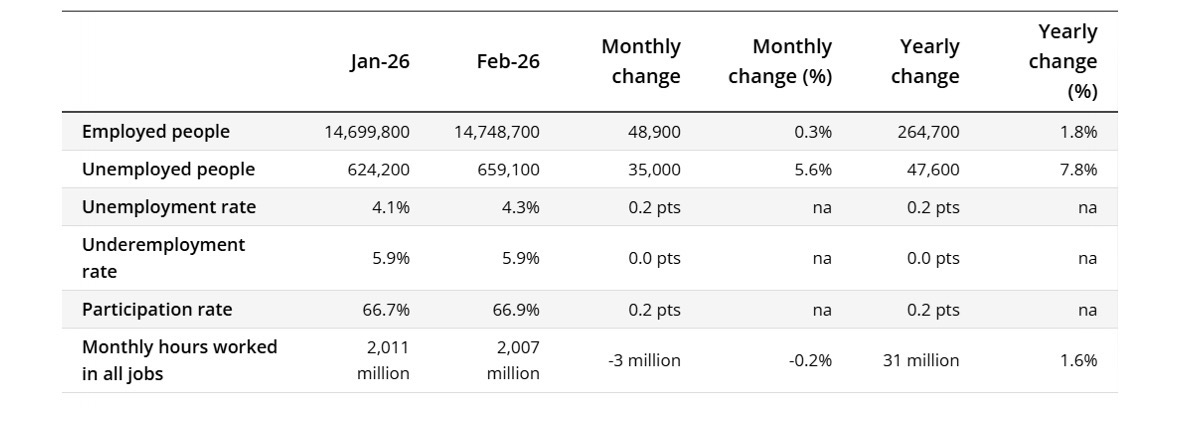
The headline says jobs are growing.
The detail says something else. Hours worked fell.
This means more people are working…but doing less.
That’s dilution dressed up as good news.
And it’s often how labour markets soften —
not with a bang, but with less work spread across more people.
2) More guests are being let in… with thinner wallets
No party is complete without a generous host.
This week’s version comes in the form of policy.
Lower deposits.
Expanded access.
More pathways into the market.
The message is simple:
“Don’t worry if you can’t quite afford it — come in anyway.”
And so they do.
More buyers.
Less equity.
More leverage.
Meanwhile, the regulator quietly steps in to cap high debt lending
Which is always an interesting signal.
When one arm of the system is opening the door wider…
and another is quietly counting how many people are already inside…
…it suggests the room may be closer to capacity than advertised.
The herd sees opportunity.
The operator sees something else:
the marginal buyer is getting weaker
And in any market, it is the marginal buyer who sets the price.
What’s really happening beneath the surface of lending
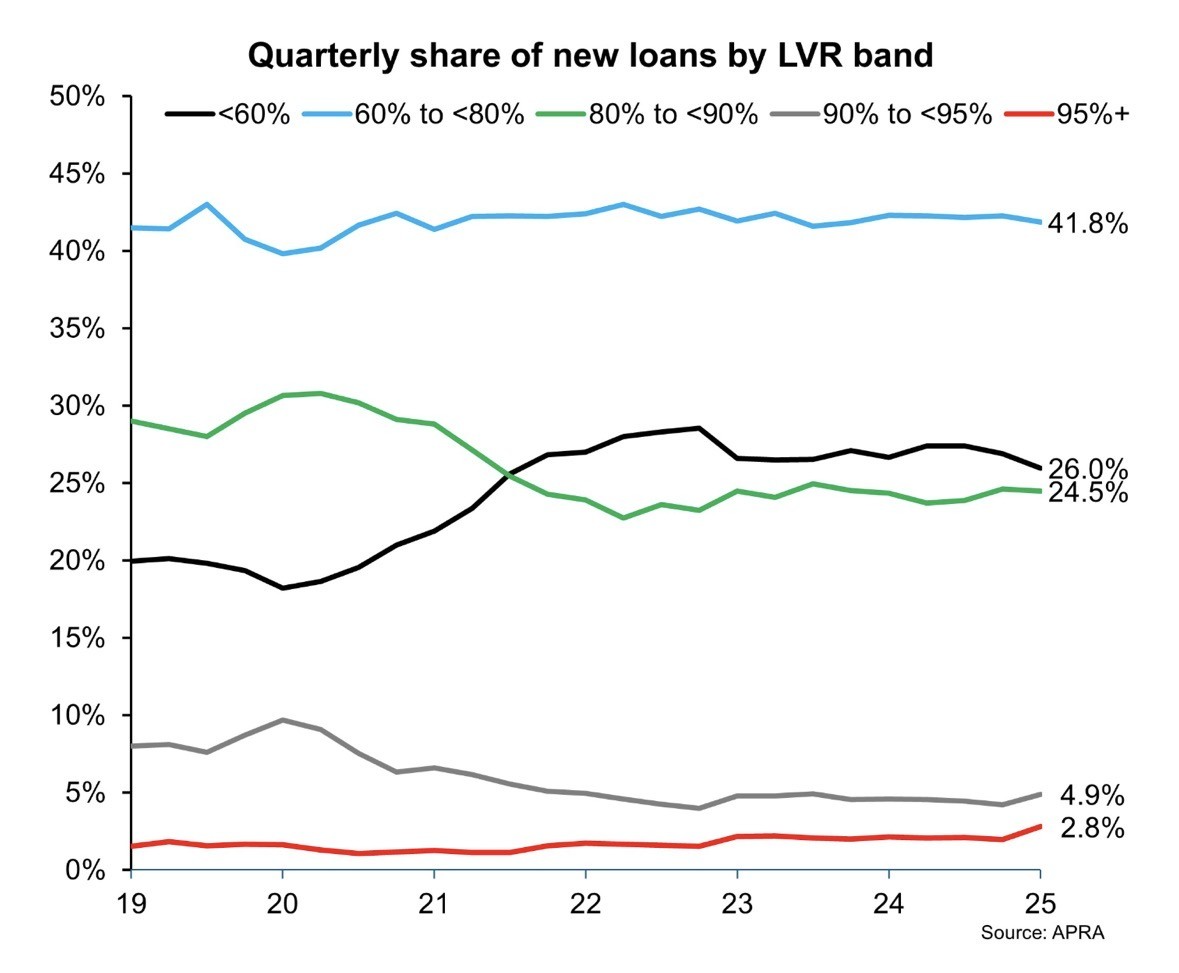
This chart tell the real story that belies the headlines.
At a glance, lending still looks “normal.”
But look closer.
More borrowers are entering the market with higher leverage —
smaller deposits, thinner buffers, less room for error.
Take a look at this graph:
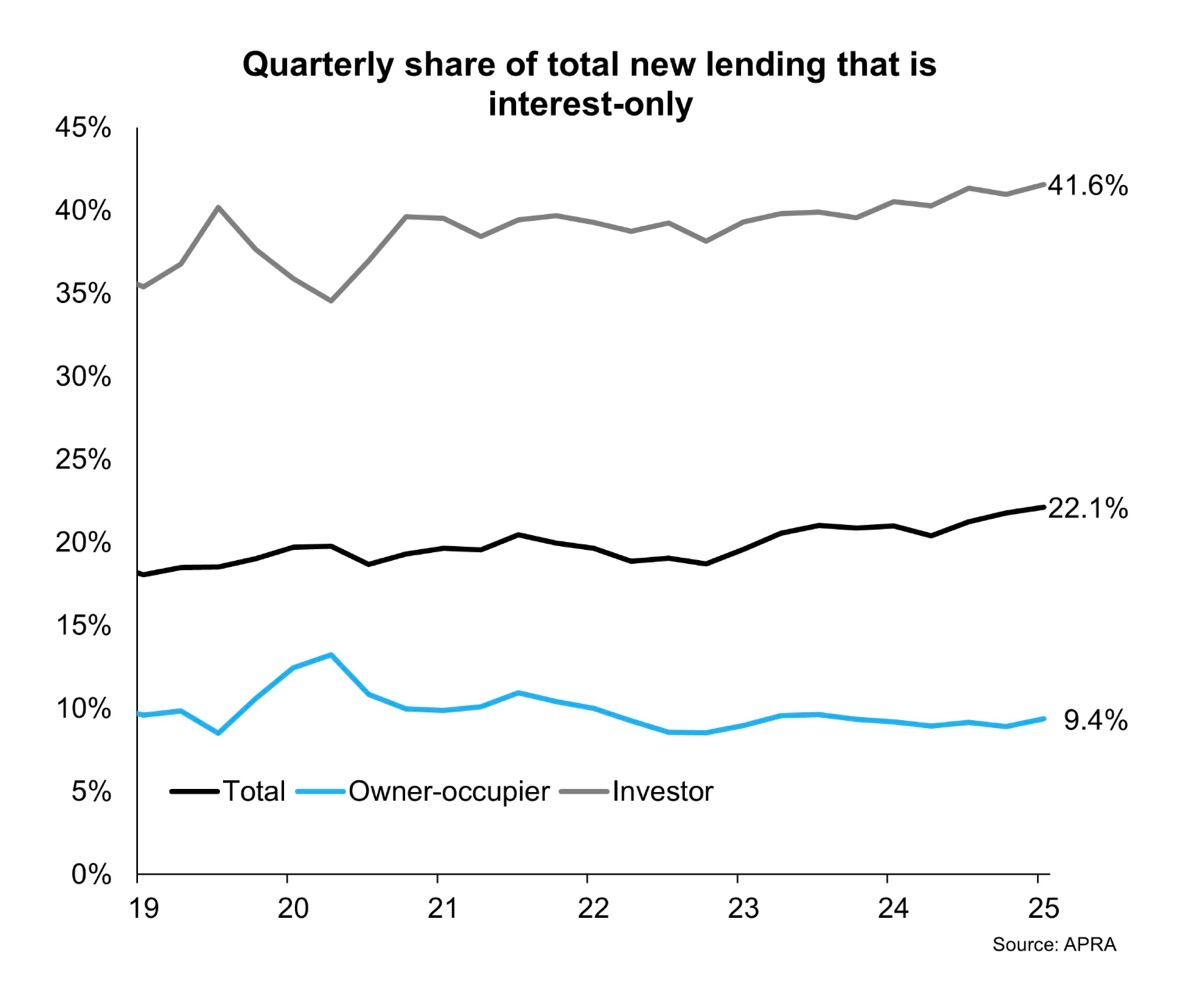
Interest-only lending is rising again, particularly among investors.
Which is another subtle shift.
Because interest-only loans don’t reduce debt.
They just manage cashflow.
So what you’re seeing is not a system becoming more conservative.
It’s a system adapting to pressure.
Borrowers stretching to get in.
And structuring loans to cope once they’re there.
The crowd sees:
“People are still buying — demand is strong.”
The operator sees:
“People are having to stretch more to keep buying.”
And that’s a very different signal.
Because markets don’t break when demand disappears.
But they do get fragile when demand becomes dependent on leverage.
3) The floor is getting stickier
Then there’s the matter of interest rates.
Another rise.
Nothing dramatic.
Nothing headline-grabbing.
In fact, barely noticed in the broader news cycle — which was far more interested in how wealthy everyone suddenly feels.
But rate rises are like the floor getting stickier as the night goes on.
At first, no one notices.
Then movement gets a little less smooth.
Then the clumsy dancers start having problems.
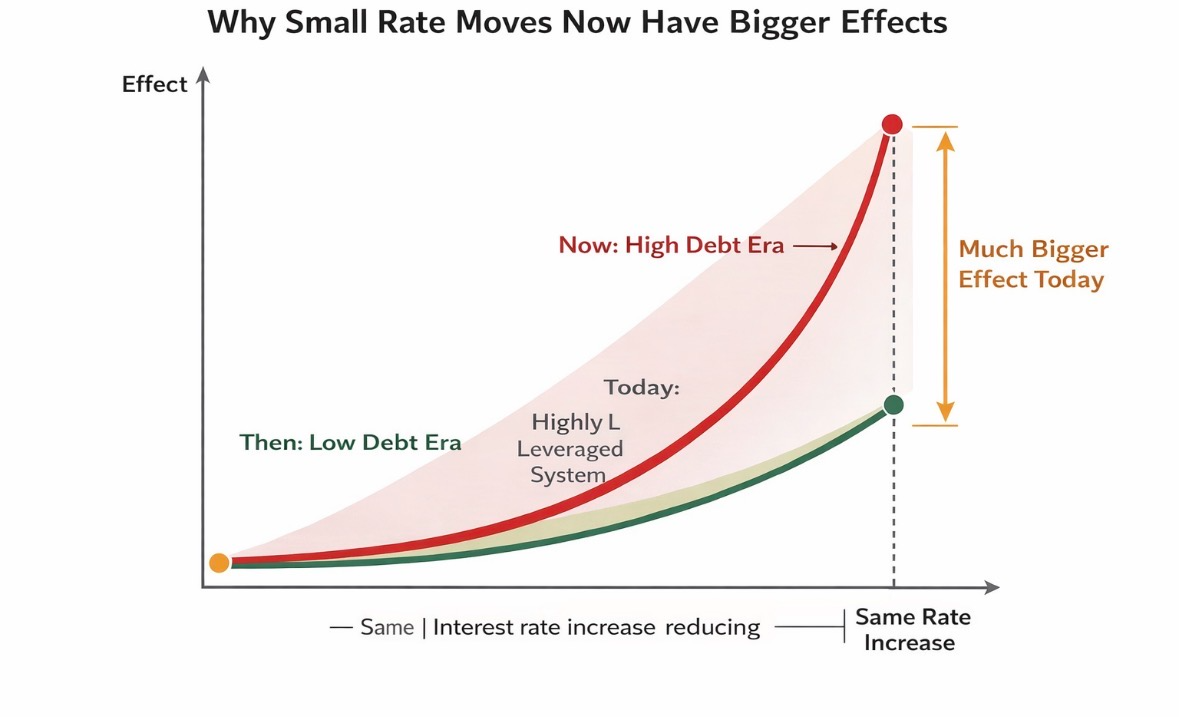
And when debt levels are high, even small changes in rates don’t stay small.
They compound.
Quietly at first.
Then all at once.
This is what’s known as a non-linear, compounding effect.
The system doesn’t respond in a straight line.
When debt is low, rate changes are manageable.
When debt is high, they bite harder.
And at a certain point…
it’s not the rate rise itself that matters.
It’s the system it lands on.
People always point to the last drink as causing the problem.
But that’s just the tipping point.
It’s everything that came before it.
4) Everyone feels richer… and that’s the point
This week’s dominant headline:
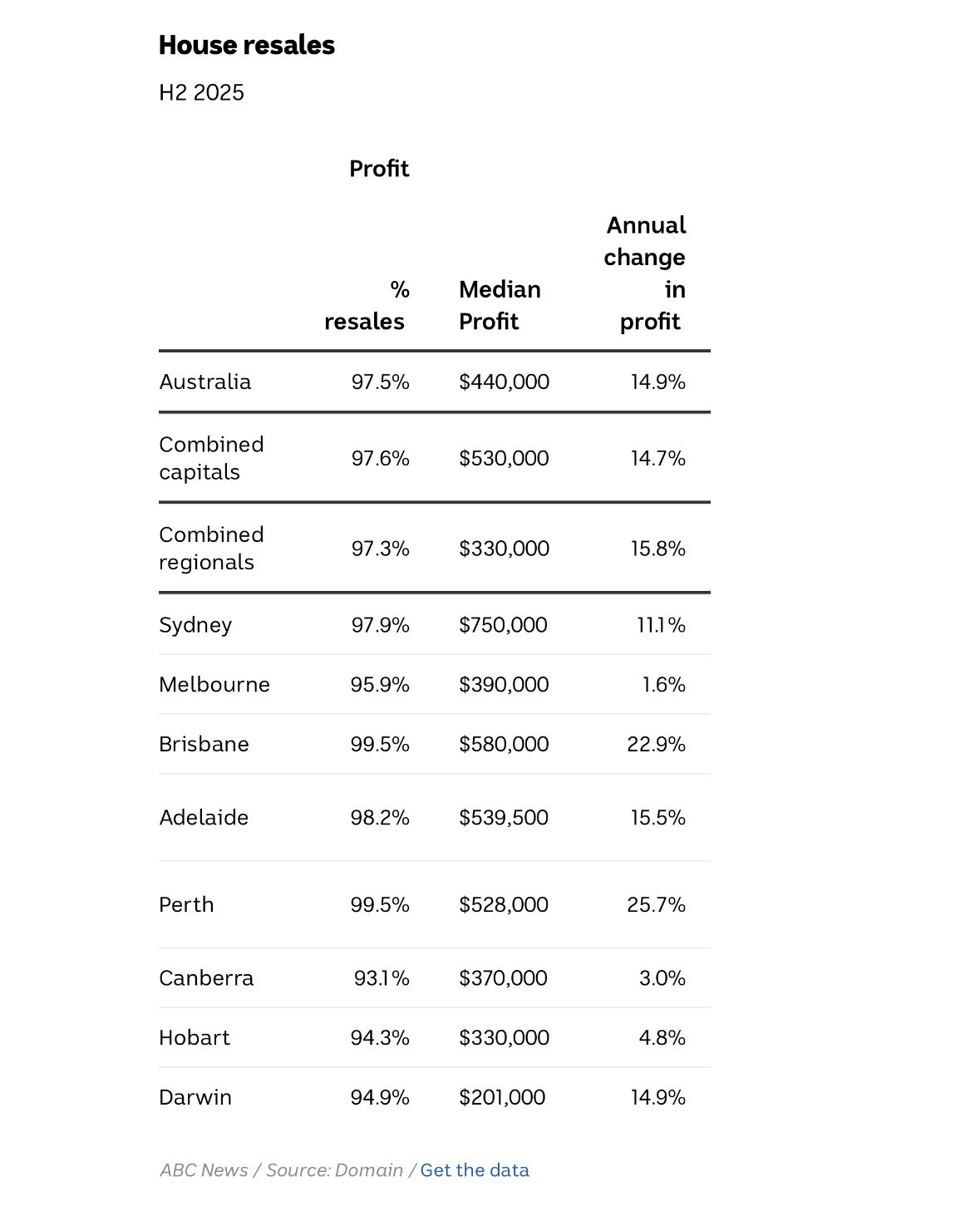
record homeowner equity.
And the data backs it up.
Nearly every property resale is profitable.
Median gains are substantial.
Across most markets, owners are walking away with hundreds of thousands in profit.
On paper, Australians have never looked wealthier.
And in many cases… they are.
But this is worth understanding properly.
Because this isn’t just a story about wealth.
It’s a story about how forgiving the market has been.
When almost every resale makes money…
it tells you something important:
not that every decision was good.
But that the environment was.
At the start of the night, everyone looks like a good dancer.
The music is clear.
The floor is steady.
And even clumsy moves pass for confidence.
That’s what a market like this does.
It rewards participation.
It smooths over mistakes.
It makes average decisions look like skill.
But that’s also why this moment matters.
Because wealth built in a forgiving environment behaves differently to wealth built in a selective one.
Equity is not income.
It is not liquidity.
It does not make repayments.
And it depends on conditions staying supportive.
So the real question isn’t:
“Are people wealthier?”
It’s:
“How dependent is that wealth on the conditions that created it?”
5) Where the opportunity actually is
Paradoxically, this is often when the best operator opportunities begin to appear.
Not when everything is easy.
Not when every deal looks good.
Not when the crowd is piling in and calling it skill.
But when the environment starts to tighten.
Because that’s when behaviour changes.
Buyers become more cautious.
Vendors become more flexible.
Deals fall over.
Agents start having different conversations.
And weaker players hesitate.
That’s when the market stops rewarding activity…
…and starts rewarding judgment.
The difference is important.
In an easy market, momentum does most of the work.
In a tighter market, the work shifts back to the operator:
selecting better
pricing risk properly
structuring deals intelligently
and acting when others hesitate
That’s where the advantage moves.
Not to the fastest or the loudest.
But to the ones who can still make clear decisions
when the conditions are less forgiving.
When the market stops doing the heavy lifting…
operators have to.
Operator Takeaway
This isn’t the moment to leave the party.
It’s the moment to stop drinking like everyone else.
Early in the night, it doesn’t matter.
Everyone looks fine.
Everyone’s having a good time.
Later on…
you start to notice the difference.
People get sloppy. They lose judgment.
Some shouldn’t be making decisions at all.
Operators slow down.
Stay clear.
Pick their moments.
That’s where the advantage is.
Because this stage of the market doesn’t care about your enthusiasm. It rewards precision and control.
AI Corner
While the party continues… the DJ is changing
While most people are watching prices…
something quieter is happening in the background.
The way people find and decide on property is changing.
In the past few months:
property search has moved into conversational AI
buyers can now describe what they want and get curated results instantly
platforms are starting to guide decisions, not just display listings
AI is moving closer to the front of the process:
not just assisting…
but shaping how decisions are made.
And at the same time the system is getting more fragile…
…the tools for navigating it are getting more powerful.
Operators who learn to use them will move faster, filter better, and act with more confidence than the crowd.
Closing
The music is still playing.
The drinks are still being served.
The room is still full.
And for now… the party continues.
But this stage of the cycle does not reward the best dancer.
When the lights come on… not everyone in the room looks as confident.
