The Professor, The Monkey, And The Mood Ring Market
Week ending Friday 27 Feb 2026
Every human brain runs a two-speed system.
There’s the Professor — logic, spreadsheets, neat conclusions.
And there’s the Monkey — emotion, impulse, survival wiring.
The Monkey is faster.
Logic is the thunder.
Emotion is the lightning — it arrives first and decimates the room before anyone has time to explain what happened.
The job, of course, is to tame the Monkey.
Sometimes you can.
Often you can’t.
The Professor says: “Let’s wait for the data.”
The monkey says: “I’ve already panicked, bought, sold, yelled at the TV, then felt optimistic again before lunch.”
And if you’re wondering why markets look “rational” one week and deranged the next — you’re watching the monkey drive.
Markets are simply millions of monkeys moving at once… with professors sprinting behind them, trying to write a respectable explanation.
This week, the monkeys were busy, delivering the full circus: inflation that refuses to die politely, a central bank asking for patience, consumer confidence suddenly perking up, bargain suburbs “hiding in plain sight”, foreign demand still circling, and governments inventing new pathways to ownership because necessity is the mother of invention.
Operators don’t argue with the monkey.
They price it.
1) Mood whiplash: confidence jumps… while nothing actually got easier
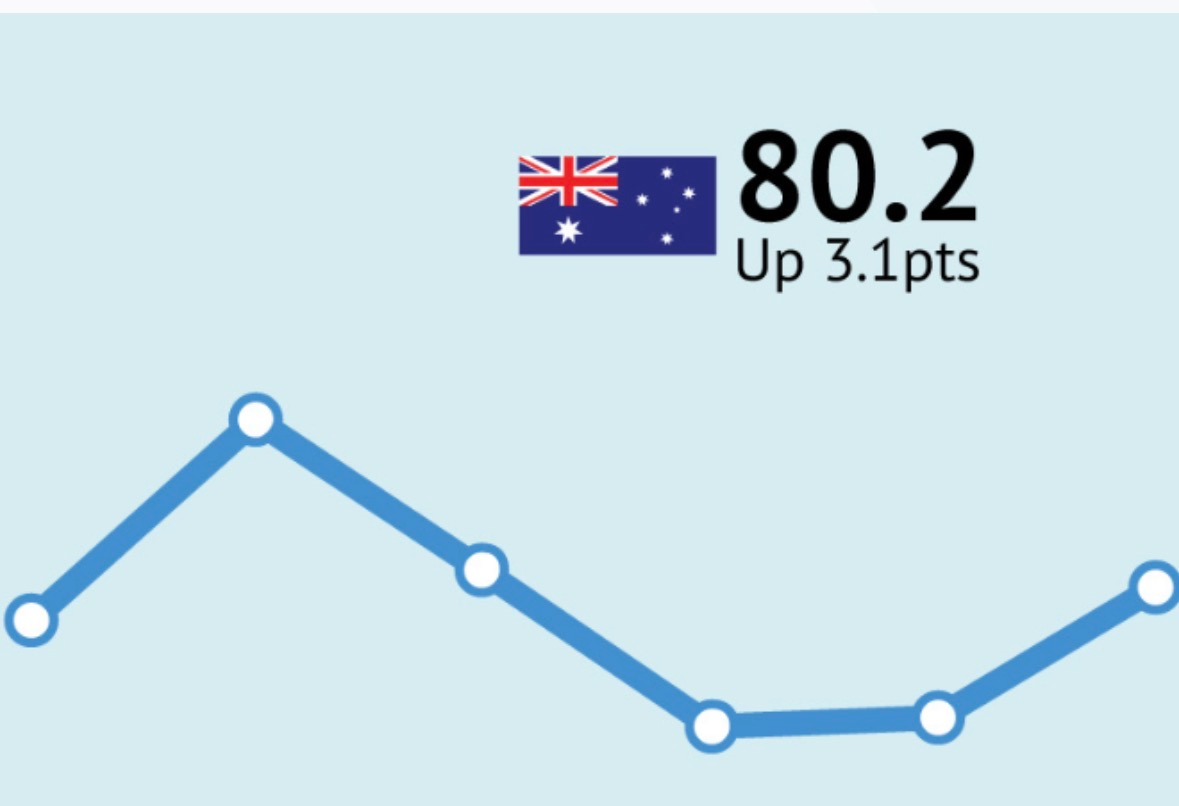
ANZ–Roy Morgan consumer confidence rose 3.1 points to 80.2 in the week ending Feb 23–24.
That doesn’t mean households are “fine”. It means the monkey found a reason to feel better — for now — and the Professor will spend the next month explaining why it’s complicated.
Operator note:
Confidence is not a forecast. It’s a temperature reading. Temperature changes behaviour fast — listings, negotiations, withdrawals, “we’ll wait”, “we’ll sell”, and “we’ll take the clean offer”.
2) Inflation: steady on the headline, hotter in the engine room
January CPI printed 3.8% year-on-year (unchanged), but the trimmed mean ticked up to 3.4% — still outside the RBA’s 2–3% comfort zone.
So yes: “moderating” and “sticky” can both be true — depending on whether you’re reading the headline or the guts.
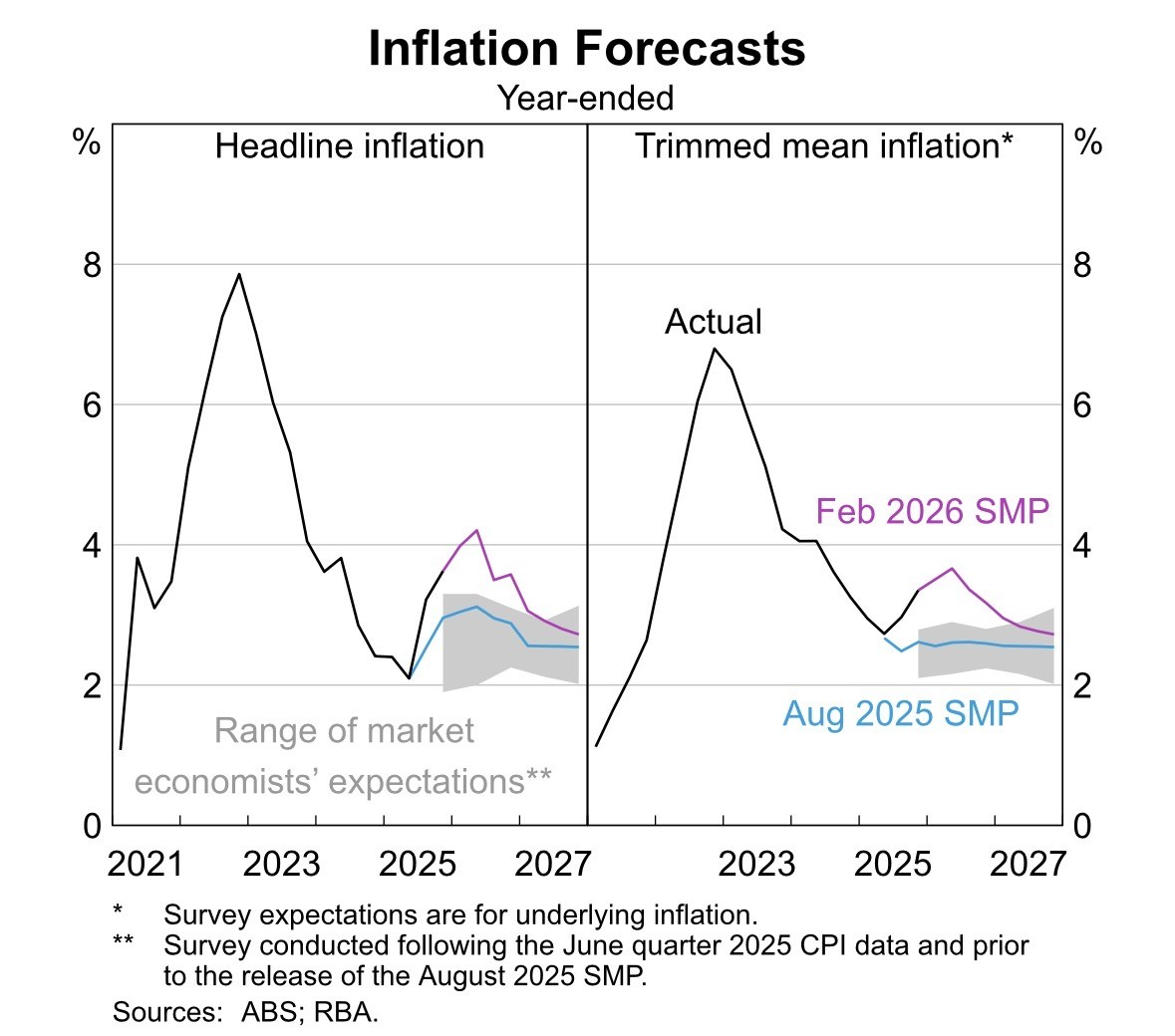
And while everyone screams “They must cut!” or “They must hike!”, RBA Governor Bullock’s point this week was basically: stop pretending we’re reacting to one data point — we’re using it as a base to project forward.
Operator note:
Markets don’t move on data. They move on interpretations of data — and then on interpretations of interpretations. The Professor is always late to the party. The monkey’s already thrown a chair.
3) “Undervalued” suburbs hiding in plain sight
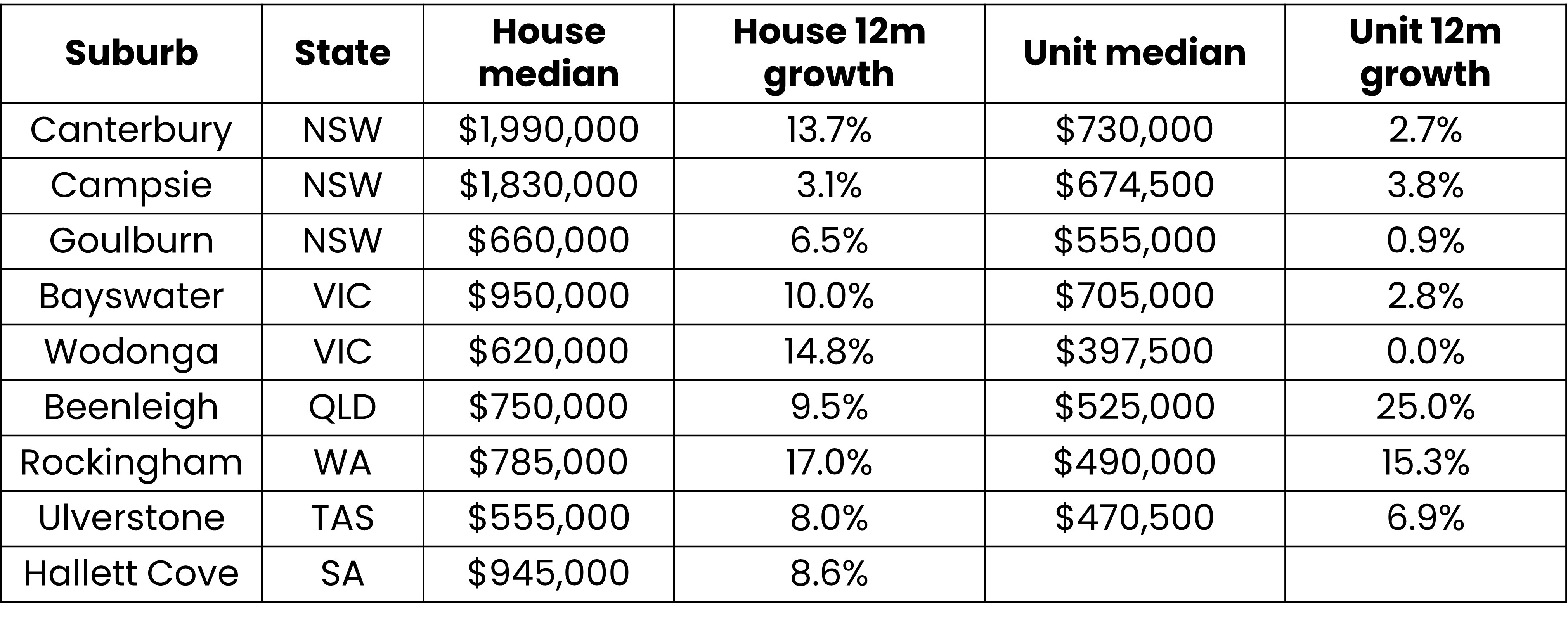
Here’s the useful bit: where the price gap still exists inside expensive ecosystems — the “wrong side of the river / road / stigma / old narrative” discounts.
From realestatedotcomdotau(PropTrack medians + 12-month growth):
Affordable/undervalued pockets called out this week
Operator note:
These lists aren’t “hot tips”. They’re a reminder of a permanent edge:
the best discounts are inside places people already want — but haven’t emotionally re-priced yet.
4) “Foreign investors spent $3.7bn” — but aren’t they banned?
Yes and no — and the confusion is the point.
Australia is under a temporary ban on foreign purchases of established dwellings from 1 April 2025 to 31 March 2027, unless an exception applies.
So why are foreign buyers still “in the mix”?
Because:
a lot of what they cite as “international demand” is actually just search activity (not settlement),
foreign money can still flow into new builds / high-density / approved pathways,
and there are exceptions (including supply-increasing redevelopment scenarios and certain programs).
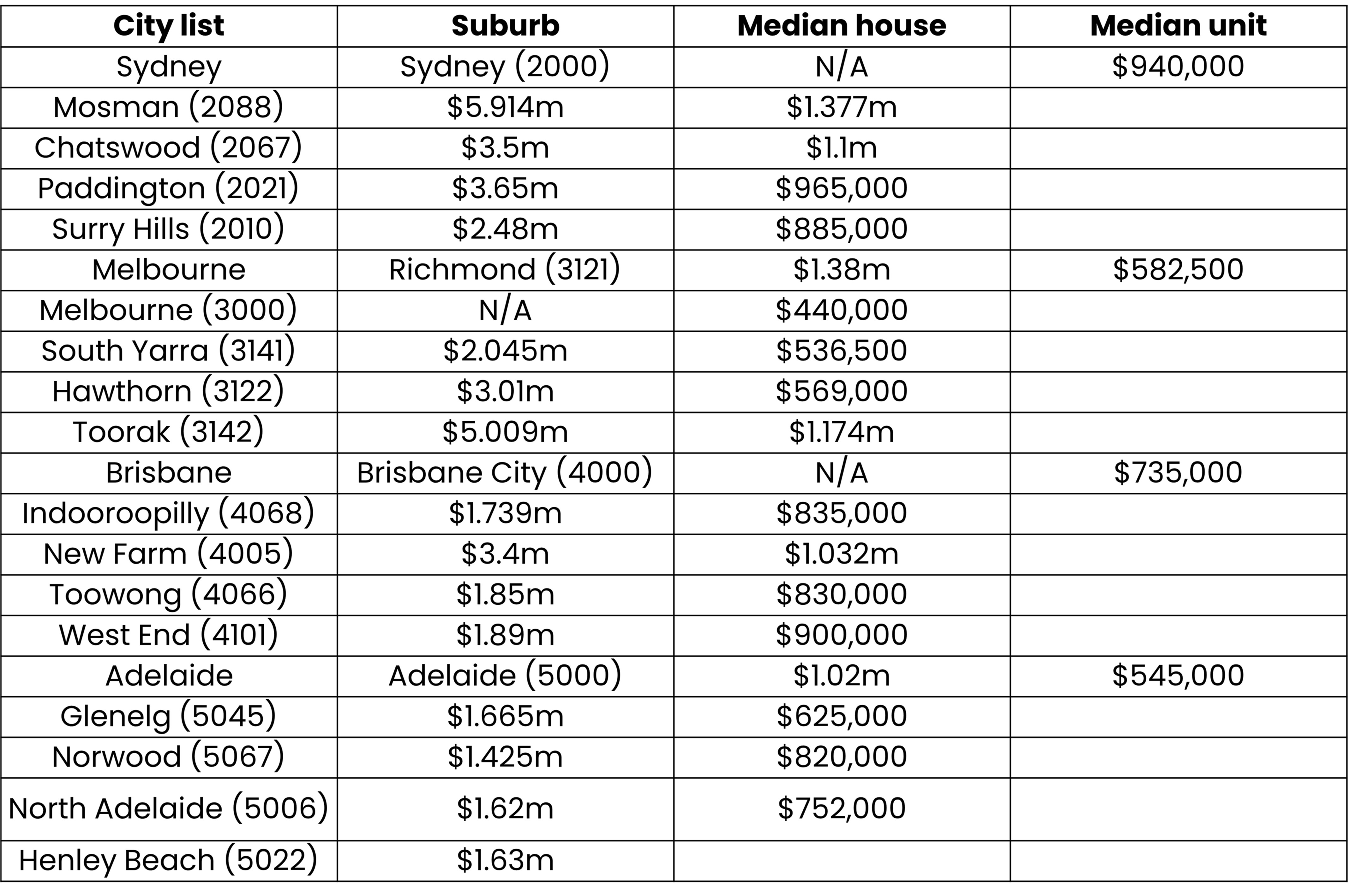
Realestatedotcomdotau also published the top suburbs being searched by international buyers (PropTrack medians):
Top suburbs searched by international buyers (selected capital lists)
Operator note:
The practical takeaway isn’t “foreigners are back”.
It’s that desire concentrates in the obvious places — and when desire concentrates, pricing gets less forgiving… and negotiation gets more theatrical.
5) Creative funding: when the system jams, new workarounds appear
South Australia is pushing “build-to-rent-to-own” style schemes where eligible buyers can move into a newly built home, pay 75% of market rent, and later purchase.
Forget the politics. Look at the pattern:
When affordability bites, societies don’t become more rational.
They don’t revert to discipline. They find workarounds. Necessity remains the most reliable mother of invention.
Operator note:
If “normal borrowing” keeps getting constrained by reality, expect more:
rent-to-buy pathways
vendor terms / creative structures
shared-equity experiments
institutional money filling gaps retail can’t
Not because it’s elegant. Because it’s necessary.
6) AI Corner: the layoffs, the whiplash, and the actual lesson
Put the AI hype to one side and look at the week’s reality.
WiseTech announced plans to cut about 2,000 roles (~29% of workforce) as it pivots into AI-enabled operations, with management explicitly arguing the “manual coding era” is ending.
Meanwhile Atlassian is living through the market’s current favourite sport: punishing great businesses for failing to match the latest narrative. Founder, Mike Cannon-Brookes’ message is basically: B2B software isn’t dead — but plenty of players won’t survive the transition, and CEOs should stop whining and start building what customers actually want.
Operator note:
AI isn’t “replacing humans”. It’s re-pricing humans.
The winners aren’t “AI companies”.
They’re AI users.
The losers aren’t “people who avoid AI”.
They’re people who keep doing tasks the same way while the cost of doing those tasks collapses.
Operator Moves This Week
Not predictions. Positions.
Trade the mood, not the story
Confidence lifts? Great. Use it to create decision points: clean terms, tight timeframes, written clarity. When mood is unstable, certainty sells.
Work the discount inside the desirable ecosystem
The undervalued list is a map of where narratives lag prices. Operators buy where stigma is old and demand is current.
Treat “creative funding” as a signal of pressure
When governments start inventing pathways, it’s proof the standard pathway is failing at scale. Pressure creates mispricing — and mispricing is where operators eat.
The Takeaway
The Professor will keep producing charts.
The monkey will keep reacting first, justifying later, and everyone will keep insisting it’s all very logical.
Operators don’t take sides.
They take positions.
