When the Crowd Panics, Operators Go Shopping
Week ending Friday 27 March 2026
Oil spikes. Markets wobble. The herd panics. History suggests that’s when the better buying starts.
Every few years, the world announces the end of the world.
Oil shocks. Wars. Banking crises. Terror attacks. Pandemics.
Different headlines… same emotional script.
This time around it’s the Middle East, oil, inflation, and whispers of petrol rationing and empty supermarket shelves.
It feels serious — and parts of it are.
But here’s the problem…
The crowd doesn’t just react to events.
It overreacts to narratives.
And that’s where operators make their money.
The Pattern That Keeps Repeating Itself
If you step back and look at the last 50 years of global shocks, a pattern emerges:
Shock hits (war, crisis, collapse)
Fear spikes (media, sentiment, “this time is different”)
Activity freezes (buyers disappear, decisions stall)
Prices lag… then misprice
Recovery begins before confidence returns
Take note of that - Not after. Before.
Because by the time things feel safe again…
The opportunity is already gone.
A Few Inconvenient Historical Truths
Let’s walk it through.
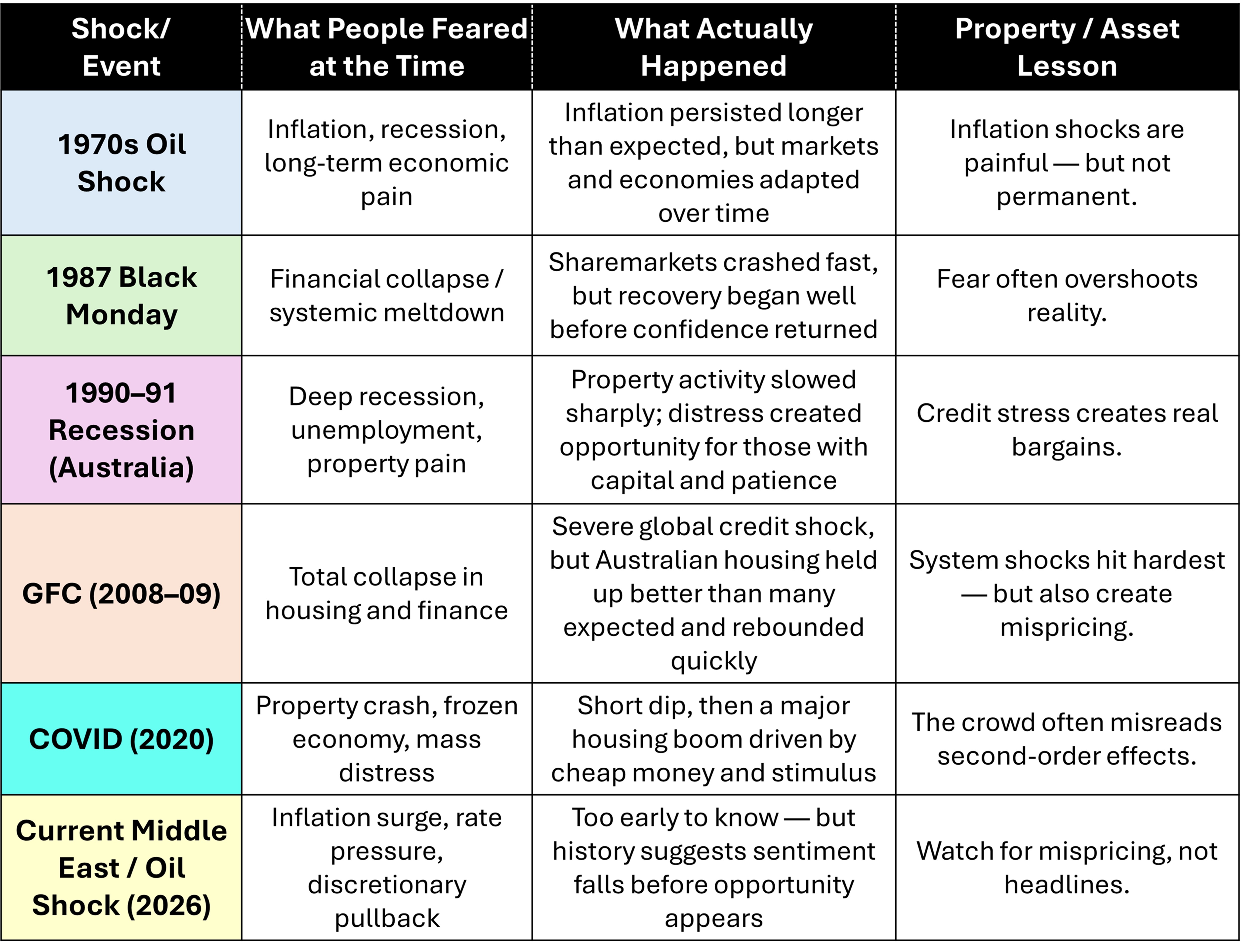
1970s Oil Shock
Oil spikes. Inflation surges. Recession fears everywhere.
And yes — it was ugly.
But even here, the key lesson wasn’t collapse.It was mispricing duration.
Inflation didn’t vanish quickly. It dragged on.
But markets adapted. Pricing adjusted. Opportunity emerged for those who understood the difference between temporary disruption and permanent decline.
1987 Crash (Black Monday)
Markets dropped 22% in a single day.
Panic everywhere.
End of the system? Not quite.
The issue wasn’t fundamentals collapsing — it was fear overshooting reality.
And that’s a pattern worth remembering.
GFC (2008–09)
Now this was different.
Because it wasn’t just fear.
It was credit breaking.
And when credit breaks:
Forced sellers emerge
Liquidity disappears
Good assets get sold with bad ones
That’s when real opportunity shows up.
Not because things are fine…
But because someone has to sell.
COVID (2020) — The Great Misread
Everyone predicted a property collapse.
Instead?
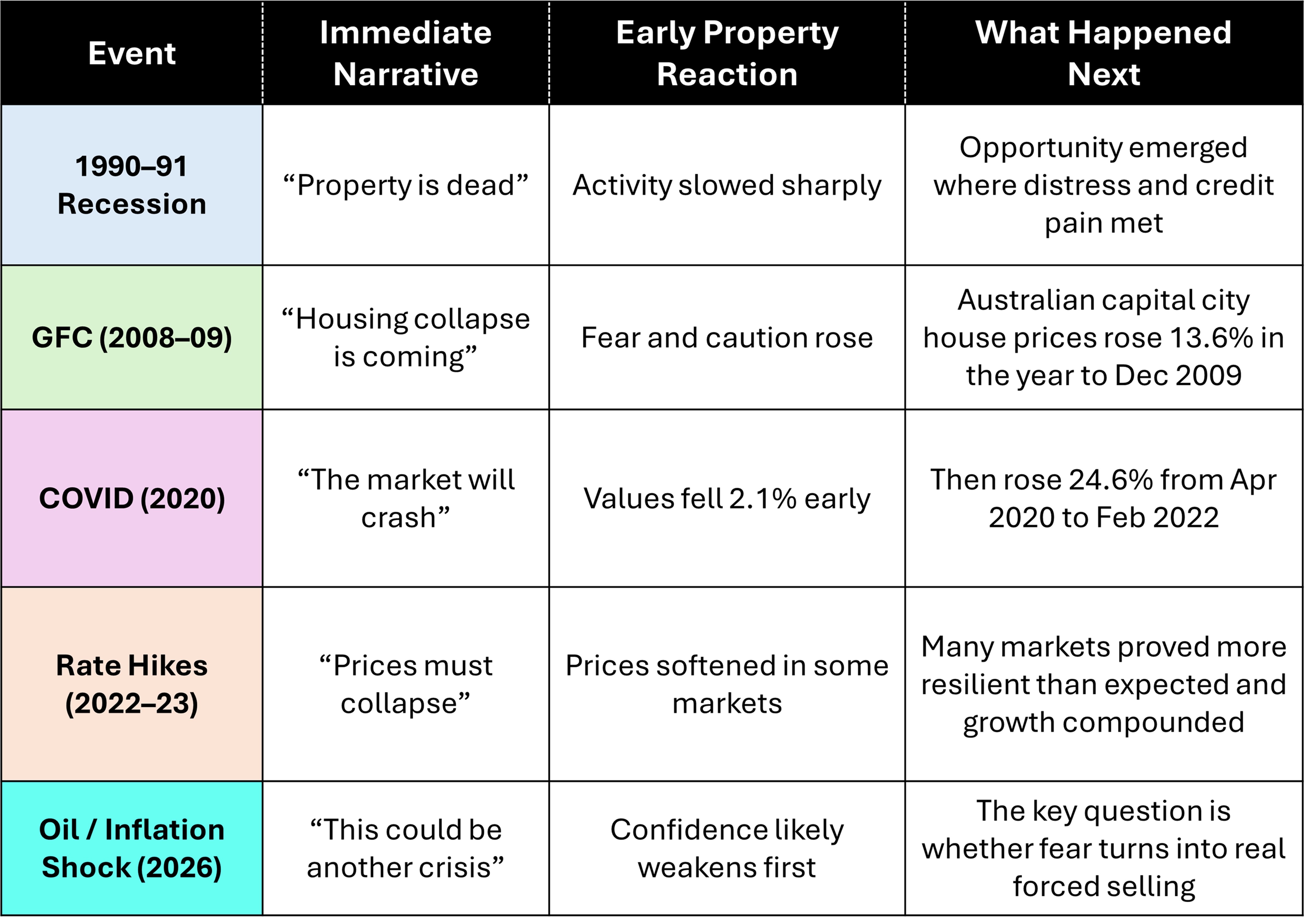
Prices dipped briefly
Then surged over 20%
Why?
Because the second-order effects mattered more:
Cheap money
Stimulus
Supply constraints
The crowd was focused on fear.
The market was pricing liquidity.
Now Fast Forward to Today
We’re back in a familiar setup:
Oil rising
Inflation risk creeping back
Interest rate cuts now uncertain
Consumer confidence already fragile
And the narrative machine is warming up:
“This is going to be as bad as COVID.”
“We’ll have petrol rationing.”
“Supply chains will collapse.”
Maybe.
But history says something more nuanced.
The Operator’s Filter
Not all shocks are equal.
There are only two that matter:
1. Sentiment Shock
Fear spikes… but fundamentals remain largely intact.
→ Transactions slow
→ Buyers hesitate
→ Sellers hold
→ Market freezes before it falls
This creates negotiation opportunities, not necessarily crashes.
2. System Shock (Credit Event)
Finance tightens. Liquidity disappears.
→ Forced selling
→ Price dislocation
→ Genuine bargains
This is where real wealth transfer happens.
So Which One Is This?
Right now?
We’re not in a GFC-style credit collapse.
We’re in a cost-of-living / energy-driven sentiment shock…
with a risk of turning into something bigger if inflation forces rates higher again.
That distinctiontells you how to play it.
What Happens Next - If History Rhymes
Here’s what tends to follow:
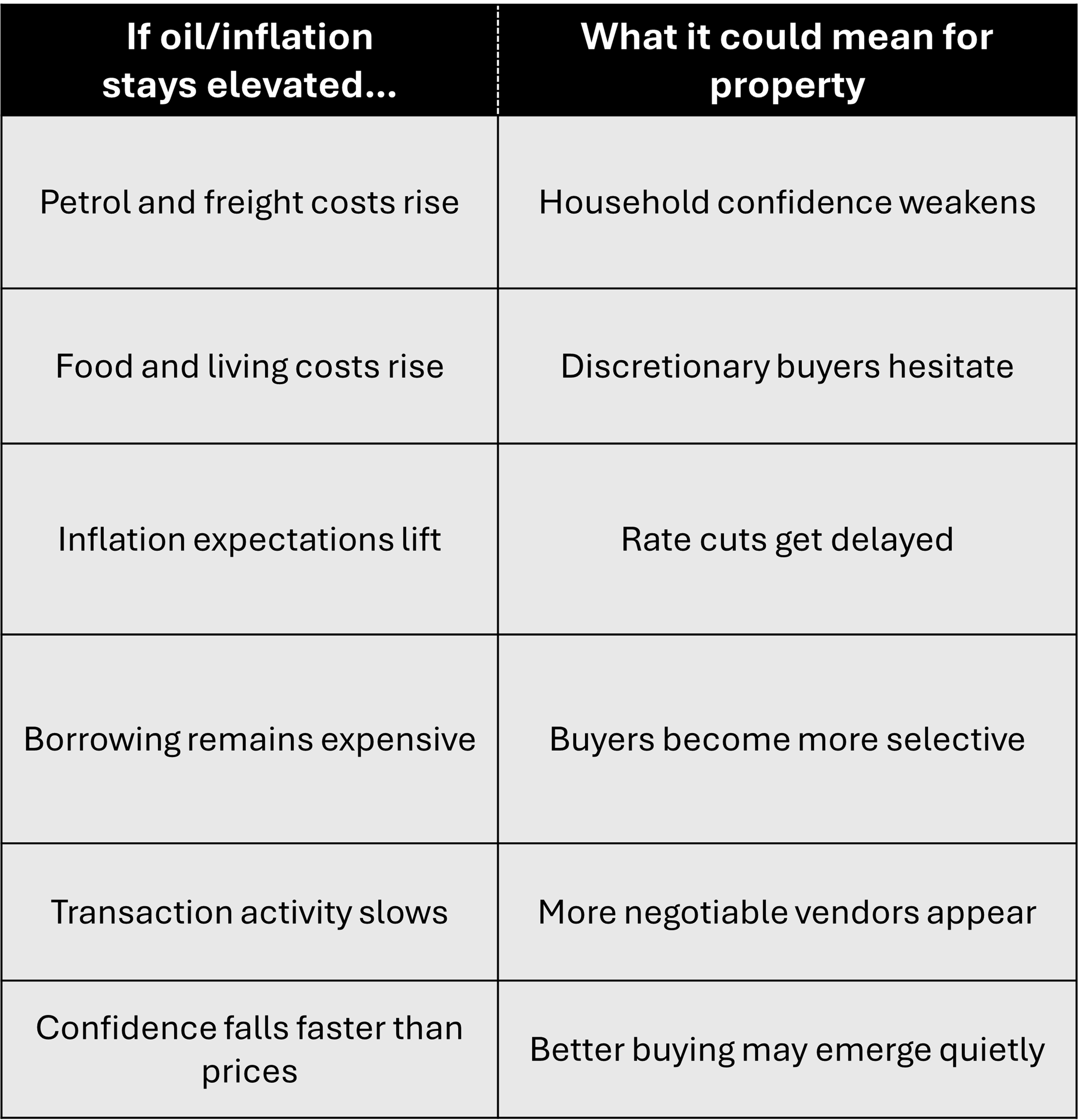
Buyers pull back
Days on market increase
Vendors become more negotiable
“Good deals” start appearing quietly
The best opportunities don’t look obvious
Because they never do.
Where the Herd Gets It Wrong
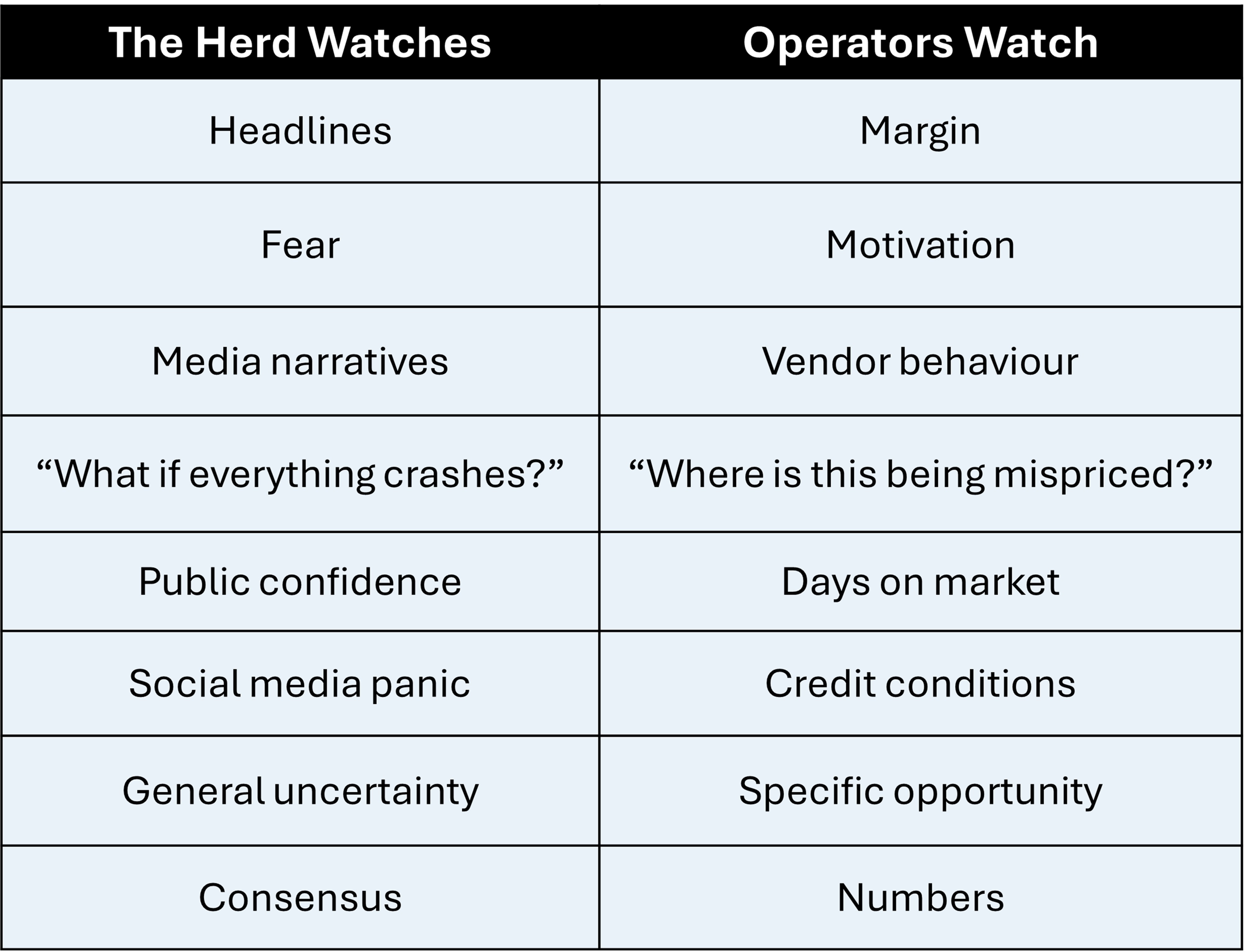
The crowd waits for:
Certainty
Stability
Good news
Operators look for:
Mispricing
Motivation
Margin
That’s the entire game.
As Buffett put it:
You pay a high price for a cheery majority.
And right now…
The majority is getting nervous.
What This Means for You Right Now
This is not the time to:
Sit on your hands
Wait for clarity
Scroll headlines
This is the time to:
Expand your suburb search
Increase deal flow
Run more feasibilities
Look for vendors under pressure
Sharpen your numbers
Because the edge is simple:
When activity drops, opportunity rises — for those still moving.
What To Watch For
The Quiet Truth About Opportunity
The best buying windows don’t feel exciting.
They feel:
Uncertain
Awkward
Slightly uncomfortable
No one rings a bell.
The media doesn’t say “all clear.”
Your friends don’t agree with you.
That’s the point.
The Crowd Wants Reassurance. Operators Want an Edge
The Takeaway
The herd buys confidence.
Operators buy value.
And if history tells us anything…
It’s that fear is loud,
but opportunity is usually quiet.
If you’re serious about finding deals in this market, don’t rely on headlines -watch the numbers.
Inside Proptix, you can:
Identify under-market opportunities
Run fast feasibility scenarios
Stress-test deals against rising costs
Make decisions based on margin, not emotion
Because in this kind of market…
Speed and clarity beat hesitation every time.
